early 20th century—‘Zeppelins in a cloud’ and variants mean ‘sausage and mash’—during World War One, the phrase was used as a manner of disregarding the fear caused by the bombing raids carried out by Zeppelin airships
USA, 1948—espresso coffee mixed with steamed milk—borrowed from Italian ‘cappuccino’, literally ‘Capuchin’, because the colour of this type of coffee resembles that of a Capuchin’s habit—cf. French ‘capucin’ (= ‘Capuchin’), a name for the hare, from the colour of the animal’s fur
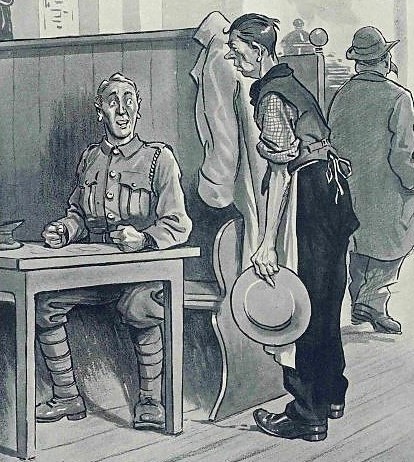
An expression of indifference to, or resigned acceptance of, a state of affairs, ‘san fairy ann’ jocularly represents the French phrase ‘ça ne fait rien’, meaning ‘that doesn’t matter’. It originated in army use on the Western Front during the First World War.
‘baloney’ or ‘boloney’: ‘humbug’ and ‘nonsense’—USA, 1922—American-English alteration of ‘bologna (sausage)’, a large smoked sausage made of seasoned mixed meats, from the name of Bologna, a city in northern Italy, where these sausages were first made
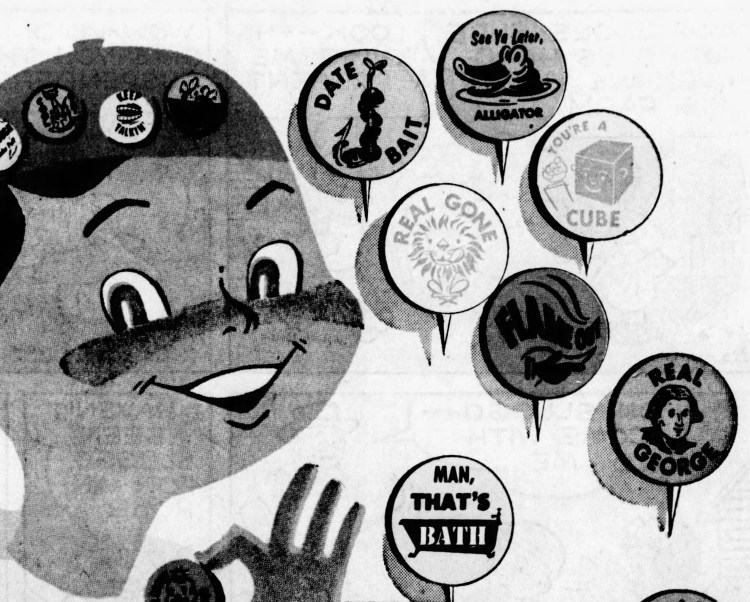
The colloquial see you later, alligator, which originated in American English, is a catchphrase used on parting. The expected response is in, or after, a while, crocodile. —Cf. also notes on ‘see you later, agitator’. The earliest instance of see you later, alligator that I have found is from Teenagers’ Slang Expressions Are Explained by […]
Etymologically, a jewel is a little game, a little plaything: ‘jewel’ is from a French diminutive of ‘jeu’, meaning ‘a game’, ‘a play’. The word ‘bijou’ is from Breton ‘bizou’, meaning ‘a finger-ring’, from ‘biz’, ‘finger’.
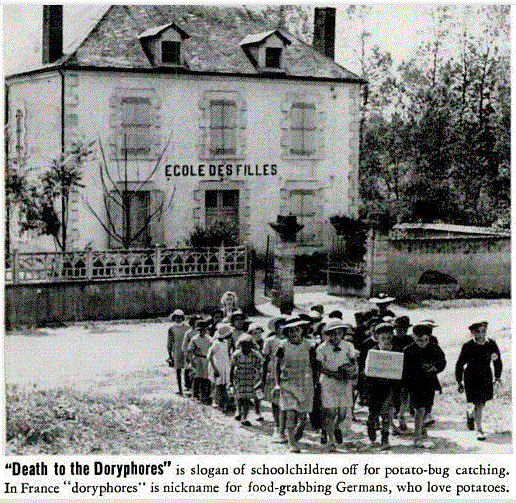
Greek ‘δορυϕόρος’ (‘doruphόros’) meant ‘spearman’; in French, ‘doryphore’ denotes the Colorado beetle and the German occupying forces during WWII; in English, it denotes a pedantic and annoyingly persistent critic.
‘queen’s’, or ‘king’s’, ‘cushion’: a seat made by two people who cross arms and hold each other’s hands to form a support for another person—Scotland and northern England, 19th century
The original meaning of beer o’clock is 5 p.m. as the end of the working day. Its first known user was Stephen King (born 1947), American author of novels of horror and suspense.
UK, early 19th century—an imaginary street where people in difficulties, now especially financial ones, are supposed to reside—urban counterpart of ‘Dicky’s meadow’