‘to have straws in one’s hair’: meaning and origin
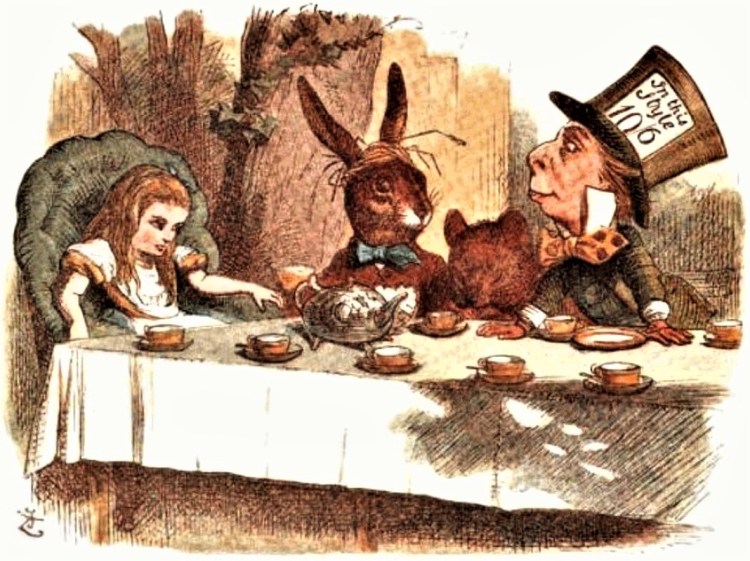
to be insane—late 19th century—originated in the fact that in 19th-century productions of Shakespeare’s ‘Hamlet’, Ophelia appeared with straws in her hair in her ‘mad scene’
Read More
“ad fontes!”
to be insane—late 19th century—originated in the fact that in 19th-century productions of Shakespeare’s ‘Hamlet’, Ophelia appeared with straws in her hair in her ‘mad scene’
Read More‘to know where the bodies are buried’: to have personal knowledge of the secrets or confidential affairs of an organisation or individual—USA, 1928, as ‘to know where the body is buried’
Read More‘to be unable to run a whelk stall’ and variants: to be incapable of managing the simplest task or enterprise—coined by John Elliot Burns (1858-1943), English trade unionist and politician, in the 1894 New Year’s address to his constituents of Battersea
Read Moreused with reference to a conventional or idealised romance—originated (USA, 1931) in cinematographic plot summaries in which ‘boy meets girl’ featured
Read More1808, as ‘to talk a horse’s hind leg off’—‘[animal’s] hind leg off’ is probably a hyperbolic extension of ‘to talk’, emphasising the speaker’s persistence or eloquence
Read MoreBritish, 1925—‘to throw a spanner in(to) the works’: to cause disruption, to interfere with the smooth running of something—synonym (American English): ‘to throw a monkey wrench into’
Read MoreThe original image was of throwing a monkey wrench into the cylinder of a threshing machine, and was exclusively applied to political situations—USA, late 19th century.
Read More‘hell in a handbasket’ (1841), ‘heaven in a handbasket’ (1834) in Irish contexts—‘handbasket’ chosen for alliteration with ‘hell’—‘to go to hell in a handbasket’ meant ‘to go to hell’—‘to go to heaven in a handbasket’ meant ‘to go to heaven’ or ‘to go to hell’
Read More‘a snowball’s chance in hell’: no chance at all (USA, 1880)—elliptically, ‘a snowball’s chance’ (USA, 1895)—in the 1880s, ‘a snowball in hell’ was also used as a term of comparison to denote something that disappears rapidly
Read MoreIn the phrase ‘sleep tight’ (USA, 1873), the adjective ‘tight’ is used as an adverb meaning ‘soundly’, i.e. ‘deeply and without disturbance’, as in the combination ‘tight asleep’ (USA, 1847).
Read More
