‘air quotes’: meaning and origin
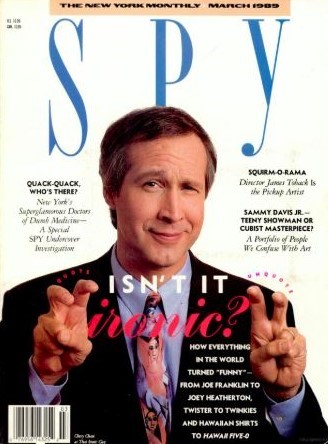
a notional set of quotation marks gestured by a speaker’s fingers in the air, to indicate that what is being said is ironic, mocking, etc.—USA, 1989
Read More
“ad fontes!”
a notional set of quotation marks gestured by a speaker’s fingers in the air, to indicate that what is being said is ironic, mocking, etc.—USA, 1989
Read More1906 (of a motor vehicle): to operate with maximum power, to function at its best—1907 (of a person or thing): to perform at peak level, to be on top form—conversely, 1910: ‘to miss/misfire on all cylinders’
Read Moreto behave childishly and petulantly, to throw a tantrum—UK, 1944—the image is of a baby throwing its toys out of its pram in a tantrum
Read Moresomething likened to the RMS Titanic in being vast and supposedly indestructible yet heading inevitably towards disaster—USA & Australia, May 1912, in the phrase ‘political Titanic’
Read Moreto engage in pointless or futile activity in the face of disaster—USA, 1969—apparently first used, and perhaps coined, by Elizabeth Carpenter, press secretary for the wife of President Lyndon B. Johnson
Read MoreUSA, 1977—immediate discomfort (such as financial hardship, effort or sacrifice) must be accepted to achieve superior, sustainable future benefits
Read Morethe smaller, perceptible part of something which is evidently much larger—USA, 1912—refers to the fact that floating ice has about 88 per cent of its mass submerged—does not seem to refer to the sinking of the Titanic
Read MoreUK, 1935—a humorous self-contradictory phrase which includes the clichéd phrase ‘to avoid like the plague’ in order to express the necessity of avoiding clichés—as a piece of advice for writers, has itself become a cliché
Read MoreUSA 1920: ‘to have the brains of a goldfish’ (to have limited intelligence)—USA, 1958: ‘to have the memory of a goldfish’ (to be unable to retain information or memories for any significant length of time)
Read MoreAmerican English, 1874—used in particular of stupidity, as in ‘dumb as a bag of hammers’ and variants—the underlying notion is probably that anything is dumb that does all the hard work
Read More word histories