origin of the phrase ‘good wine needs no bush’
first recorded in ‘As You Like It’, by Shakespeare—from the former practice of hanging a branch or bunch of ivy as a vintner’s sign in front of a tavern
Read More
“ad fontes!”
first recorded in ‘As You Like It’, by Shakespeare—from the former practice of hanging a branch or bunch of ivy as a vintner’s sign in front of a tavern
Read More
a realm of fantasy, dreams or impractical notions—1856 as ‘cuckoo-cloud-land’—from the name of the city built by the birds in ‘The Birds’, by Aristophanes
Read More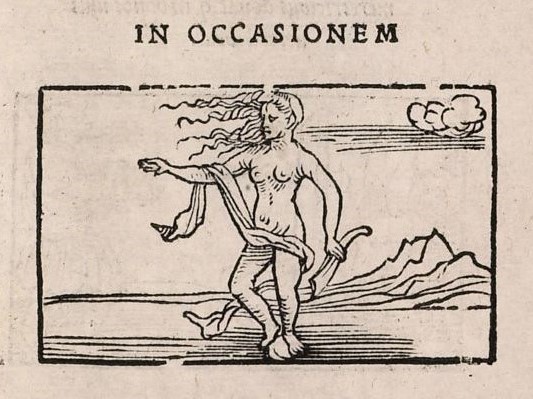
Opportunity was represented as woman completely bald except for a forelock: she can only be seized as she runs towards someone, not be caught thereafter.
Read Morethe troubles and activities of the world—literary or humorous, from Hamlet’s speech “to be or not be”—‘coil’: probably from Middle French ‘acueil’, encounter
Read More
a sweet smell produced when rain falls on parched earth—1964; literally ‘tenuous essence derived from rock or stone’, from Greek ‘petro’ and ‘ichor’
Read More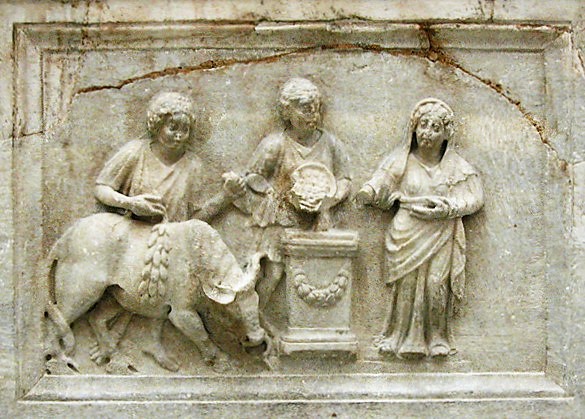
The verb ‘immolate’ is from Latin ‘immolare’, meaning, literally, ‘to sprinkle (a victim) with sacrificial meal’, from ‘mola salsa’, ‘salted spelt-meal’.
Read MoreThe noun clue appeared as a variant spelling of clew, of same pronunciation. Not frequent until the 17th century, clue has become the prevailing form of the word in the sense of a fact or idea that serves to reveal something or solve a problem. The word is from Old English cliwen, cleowen, meaning a ball formed by winding yarn, twine or thread (it is still one […]
Read MoreThe phrase to leave no stone unturned means to try every possible course of action in order to achieve something. (The equivalent French phrase has a cosmic dimension since it is remuer ciel et terre, literally, to move heaven and earth.) The image of turning every stone was already proverbial over 2000 years ago in […]
Read MoreThe phrase to steal someone’s thunder means: to use the ideas, policies, etc., devised by another person, political party, etc., for one’s own advantage or to anticipate their use by the originator. It is said to have originated in an exclamation by the English critic and ineffective playwright John Dennis (1658-1734). After the early demise […]
Read More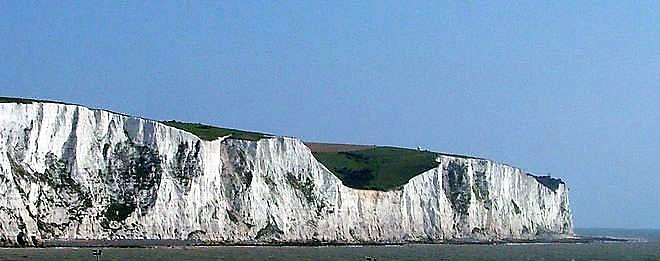
The white cliffs of Dover— to which the name Albion did not originally refer [cf. note]. (photograph: Wikimedia Commons/Fanny) The name Albion first appeared in English in the very first sentence of the first Book of the 9th-century translation of Historia ecclesiastica gentis anglorum (The Ecclesiastical History of the English People) originally written by the English monk, […]
Read More word histories