‘sword of Damocles’: meaning and origin
1625—an imminent danger—alludes to Damocles, a courtier of ancient Syracuse, who was given a lesson in the perils to a ruler’s life when forced to sit under a naked sword hanging by a single hair
Read More
“ad fontes!”
1625—an imminent danger—alludes to Damocles, a courtier of ancient Syracuse, who was given a lesson in the perils to a ruler’s life when forced to sit under a naked sword hanging by a single hair
Read More1609—to add to what is already great, also to add difficulty to difficulty—Pelion and Ossa are two mountains in Thessaly—in Greek mythology, two giants, Otus and Ephialtes, tried to pile Pelion and Ossa on Olympus in order to reach the gods and overthrow them
Read More17th century—contrasts what the mind remembers with what it forgets (with reference to the opposition between the coarser particles, which are retained by a sieve, and the finer ones, which pass through it)—denotes an extremely poor memory (with reference to the fact that a sieve does not hold all its contents)
Read More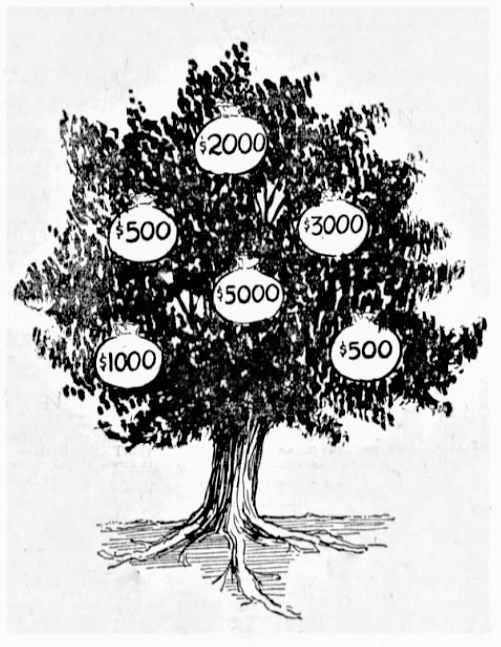
‘money tree’ (UK, 1749): a source of easily obtained or unlimited money—‘to shake the money tree’ (UK, 1851)—related to proverb ‘money does not grow on trees’
Read More
to die; to be lost or destroyed; to meet with disaster—1914, Army slang—probably from the notion of the setting sun symbolising disappearance or finality
Read More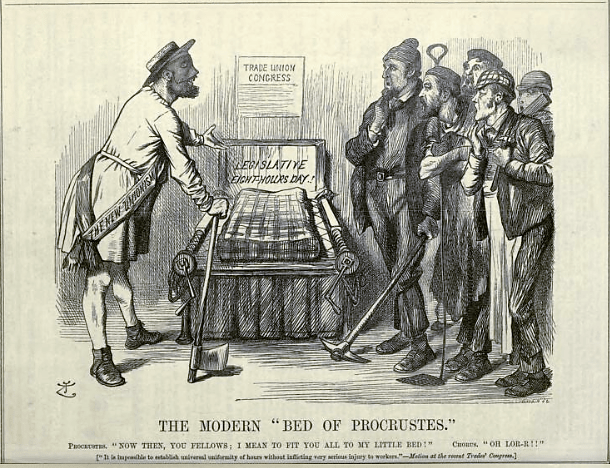
a means of enforcing conformity—Greek mythology: Procrustes was a robber who made his victims fit a bed by either stretching them longer or cutting them shorter
Read More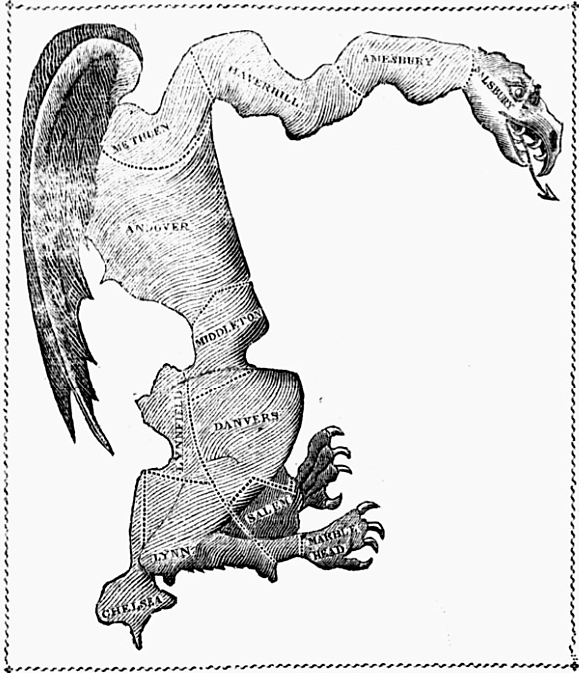
the drawing of the ‘Gerry-mander’ and the accompanying text—as published in the Boston Gazette (Boston, Massachusetts) of 26 March 1812
Read More17th century—allusion to the Aeneid, by Virgil, in which the Sybil throws a drugged cake to Cerberus, the monstrous dog guarding the entrance to Hades
Read MoreUK, 1819—specifically invented to qualify the English poet and critic William Gifford with reference to the fact that he had been a shoemaker’s apprentice—alludes to the proverb ‘let the cobbler stick to his last’ from Pliny’s Natural History (AD 77)
Read More‘Atlantic’ originally referred to Mount Atlas in North Africa, on which the heavens were fabled to rest; it was hence applied to the sea near the western shore of Africa, and afterwards extended to the whole ocean lying between Europe and Africa on the east and America on the west.
Read More word histories