origin and sense development of the verb ‘shanghai’
USA—1853 to kidnap for service aboard ship—seems to have originated in San Francisco—refers to Shanghai in China, the ships in question going to eastern Asia
Read More
“ad fontes!”
USA—1853 to kidnap for service aboard ship—seems to have originated in San Francisco—refers to Shanghai in China, the ships in question going to eastern Asia
Read More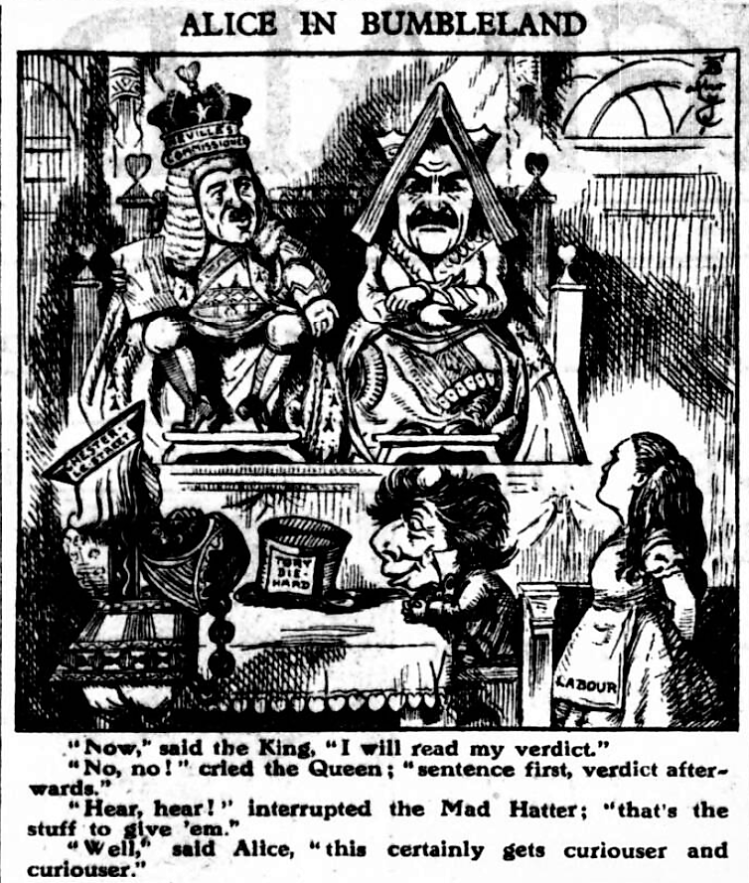
UK, 1869—used to denounce arbitrariness—alludes to a demand by the Queen of Hearts during the trial of the Knave of Hearts in Alice’s Adventures in Wonderland (1865)
Read More1969 as ‘No Go Land’, proper name of a Catholic ghetto in Belfast—1970 as ‘no-go area’, any Northern-Irish area to which entry was restricted or forbidden
Read More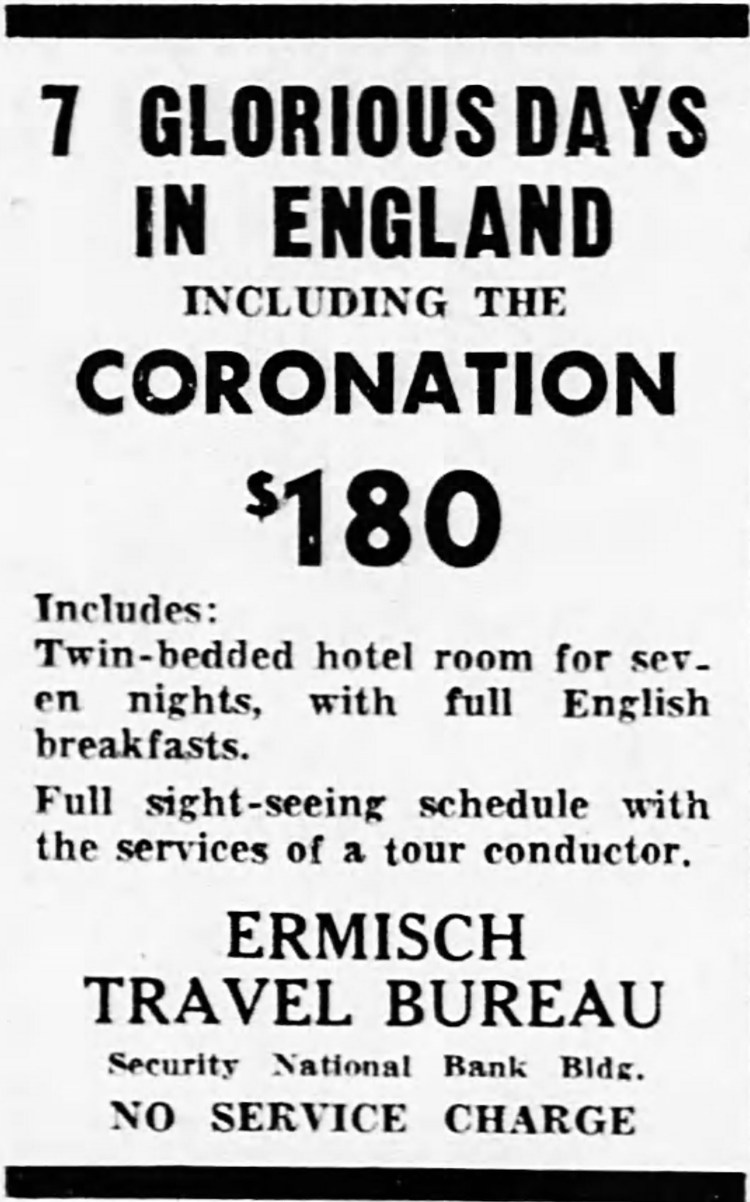
UK, 1933—a substantial breakfast including hot cooked foods such as bacon, sausages, eggs and baked beans
Read More
1850, in The Times of London, apparently as a translation from German—later instances (Minnesota, 1891-98) also associated with German to an extent or another
Read Moreto behave in an unpleasant, aggressive or overbearing manner; to speak in a sarcastic or caustic way—British Army slang, World War I
Read More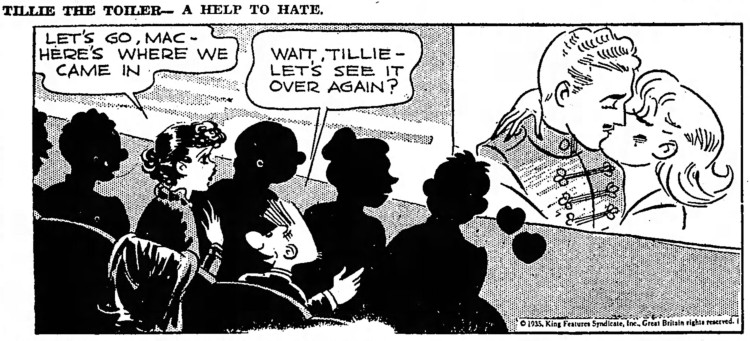
when there were consecutive screenings of a film, spectators could start watching at any point and stay on to watch the first part on the next showing
Read More
to die; to be lost or destroyed; to meet with disaster—1914, Army slang—probably from the notion of the setting sun symbolising disappearance or finality
Read More
USA, 1942, Army slang—popularised in the Army weekly ‘Yank’ by ‘The Sad Sack’, a cartoon strip by George Baker, depicting the misfortunes of an inept private
Read More
the time of one’s greatest success—from the speech made on 18 June 1940 by P.M. Winston Churchill after the fall of France and before the Battle of Britain
Read More
