‘like a dose of salts’: meaning and origin
UK, 1806—very rapidly and thoroughly—refers to a dose of aperient salts—has come to be also used in the extended form ‘like a dose of salts through + noun’
Read More
“ad fontes!”
UK, 1806—very rapidly and thoroughly—refers to a dose of aperient salts—has come to be also used in the extended form ‘like a dose of salts through + noun’
Read More1733—denotes imaginary or non-existent people—refers to John Falstaff’s vaunting tale in the First Part of King Henry the Fourth, by William Shakespeare, in which two men in buckram suits gradually become eleven
Read MoreUK, 1805—personifies France or the French people, or designates a typical Frenchman—composed of ‘Johnny’, a pet form of ‘John’ used, with modifying word, to designate a person of the type, group, etc., specified, and of French ‘crapaud’ (a toad)—coined by British sailors during the Napoleonic Wars
Read More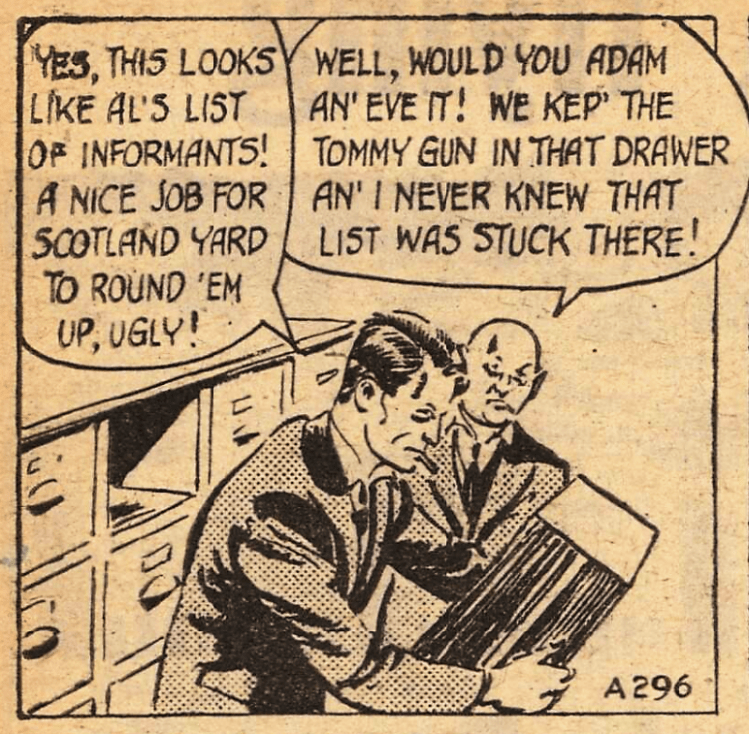
UK, 1925—the verb ‘Adam and Eve’ is rhyming slang for ‘to believe’—there is no truncation, contrary to the usual rhyming-slang formation (cf. ‘scooby’, rhyming slang for ‘clue’, which is short for ‘Scooby Doo’)
Read More1945—a woman from Liverpool, a city and seaport in north-western England—from the noun ‘Scouser’, denoting a person from Liverpool, and the suffix ‘-ette’, used to form nouns denoting female gender
Read More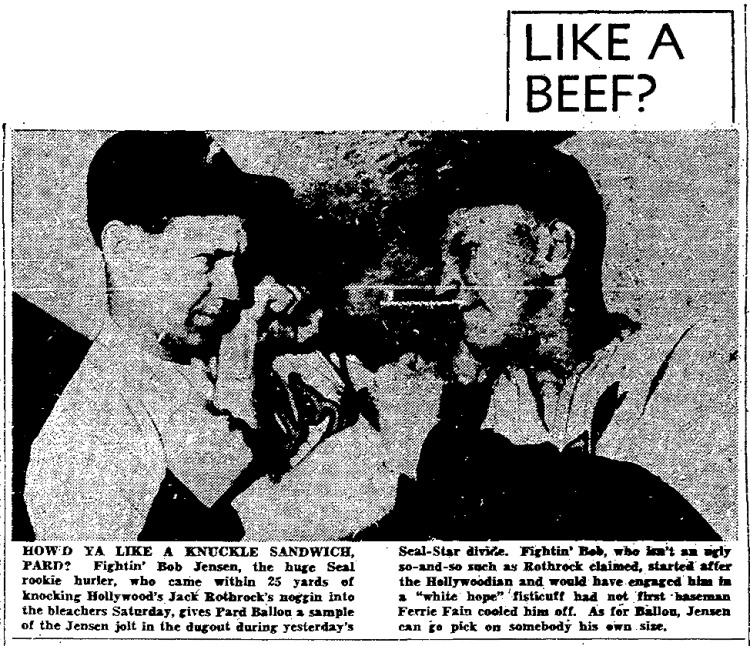
‘knuckle-sandwich’ USA, 1940—‘knuckle-butty’ UK, 1972—a punch to the mouth (or to the stomach)—the image is of a sandwich of knuckles being forced into the mouth (or into the stomach) of the person who is punched
Read Morea dentist—World War Two—slang of the British armed forces—was soon adopted into (and came to be regarded as) Australian English—earlier synonyms: ‘fang-faker’ and ‘fang-wrencher’
Read MoreUK and Ireland—with reference to the fact that Horatio Nelson was blinded in one eye—(1922) ‘until/when Nelson gets his eye back’ is used of a very long time in the future—(1933) the metaphor of Nelson getting his eye back is used of a very small chance of success
Read MoreUK, 1980—denotes someone or something that is unwelcome, unpopular, etc.—first recorded in a remark by the Scottish comedian Billy Connolly, but perhaps originated in Royal-Navy slang
Read Morea small component of a much larger structure, system or process; an insignificant individual within a large population or community—commonly associated with ‘Another Brick in the Wall’, the title of a three-part composition by the British band Pink Floyd in their 1979 rock opera ‘The Wall’, but has been used since 1867
Read More word histories