‘the morning after the night before’: meanings and early occurrences
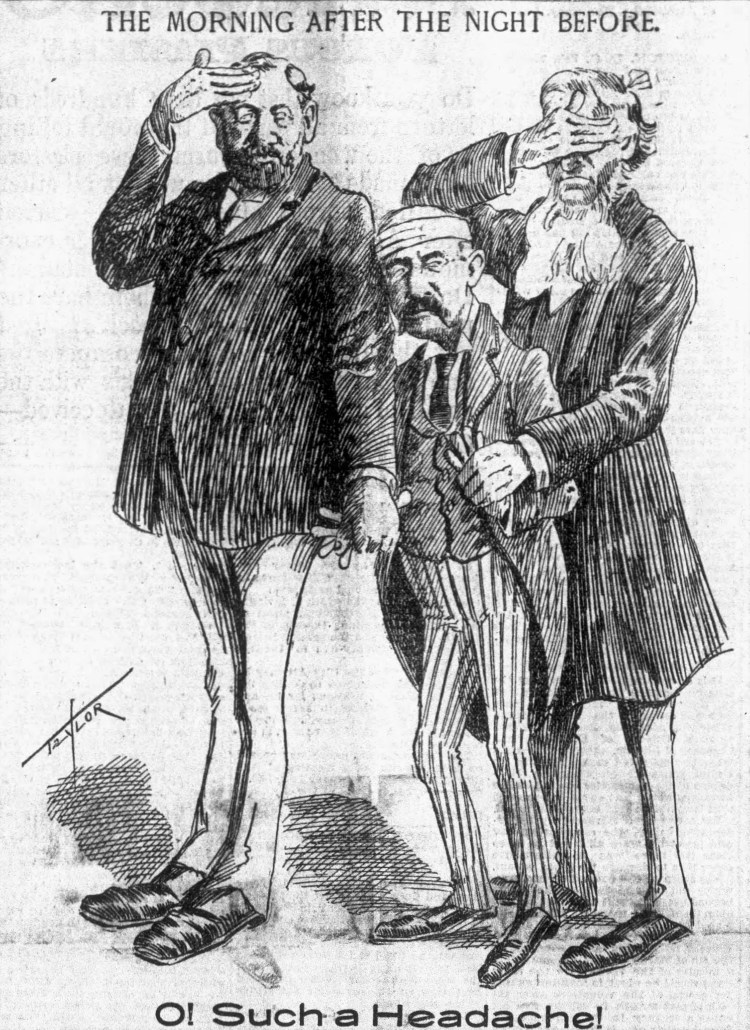
UK, 1860—the morning after an evening of drinking, when one has a hangover—in extended use: the morning after any night of excessive revelry
Read More
“ad fontes!”
UK, 1860—the morning after an evening of drinking, when one has a hangover—in extended use: the morning after any night of excessive revelry
Read MoreYupik—meaning: “his mind knows what to do but he does not do it”—applied to someone who consistently violates the norms of society in multiple ways—used in January 2022 by Dominic Cummings to describe Boris Johnson
Read MoreJapan 1990s—the extreme avoidance of social contact, especially by adolescent males; a person, typically an adolescent male, who avoids social contact—Japanese ‘hikikomori’ is the nominalised stem of the verb ‘hikikomoru’, meaning ‘to withdraw into seclusion’
Read MoreUSA, 1907—the (alleged) form of dementedness, leading to violence, that takes hold of a man who believes that his home has been invaded, or that his family has been violated—coined by attorney Delphin M. Delmas, who defended Harry K. Thaw in his first murder trial
Read MoreUSA, 1942—over-ready to shoot at anything at any time or on slight provocation—during and following WWII, ‘happy’ was used as the second element in compound adjectives relating to mental instability associated with the first element
Read More
Australia, 1965—a panacea; a source of comfort; also indicates the need for a rest to settle down—originated in ‘A Cup of Tea, a Bex and a Good Lie Down’ (1965), a satiric revue by John McKellar—‘Bex’ was a proprietary name for a type of analgesic
Read MoreAustralia, 1873—a refreshing sea-breeze that blows into Fremantle and Perth after hot weather, especially in the evening—Fremantle is a port city in Western Australia, near Perth—with reference to the action of an onshore breeze against diseases, ‘doctor’ denotes, in Western Australia and in the West Indies, a cool sea-breeze which usually prevails during part of the day in summer
Read MoreUSA—‘wishful thinking’, 1915: thinking in which one, consciously or unconsciously, interprets facts as one would like them to be rather than as they really are—‘wishful thinker’, 1917: a person who, consciously or unconsciously, interprets facts as he or she would like them to be rather than as they really are
Read MoreUSA, 1987—a joke of the type said to be told by fathers, i.e., a hackneyed, embarrassing or unoriginal joke
Read MoreUSA, 1893—the part of a town or city in which prostitution and other commercial sexual activities are concentrated—originally used of Louisville, Kentucky—from the use of a red light as a sign outside a brothel
Read More
