meaning and origin of the proverb ‘quot homines tot sententiæ’
from Phormio, by the Roman dramatist Terence—appeared in English in the 1539 translation of Erasmus’s adages
Read More
“ad fontes!”
from Phormio, by the Roman dramatist Terence—appeared in English in the 1539 translation of Erasmus’s adages
Read More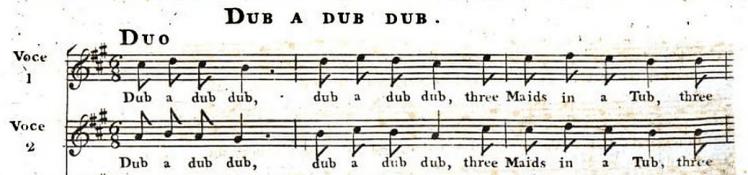
UK, 1848—people of various professions; people of all kinds—alludes to ‘Rub a dub dub’, a nursery rhyme of the late 18th century
Read MoreUK, 1869—inaccurate translation of Latin ‘panem and circenses’ (literally ‘bread and circus games’) as used by the Roman poet Juvenal
Read Moreoriginated in the mistranslation by Erasmus of Greek ‘skáphē’ (meaning anything hollowed out) as a word denoting a digging tool
Read More17th century—allusion to the Aeneid, by Virgil, in which the Sybil throws a drugged cake to Cerberus, the monstrous dog guarding the entrance to Hades
Read Morefrom Old French and Anglo-Norman ‘aveir de peis’, ‘goods of weight’, as distinguished from the goods sold by measure or number
Read MoreUSA, 1914—‘ailurophile’: a cat lover—‘ailurophobe’: opposite sense—based on ancient Greek ‘aílouros’, ‘cat’, perhaps from ‘aiόlos’, ‘swift’, and ‘ourá’, ‘tail’, the cat being perhaps so called on account of the swift movement to and fro of its tail
Read More
late 16th century—from early modern Dutch ‘maelstrom’ (now ‘maalstroom’)—originally a proper name designating a powerful whirlpool in the Arctic Ocean, off the west coast of Norway, which was formerly supposed to suck in and destroy all vessels within a wide radius
Read Morefrom classical Latin ‘urbī’, dative of ‘urbs’ (city), and ‘orbī’, dative of ‘orbis’ (orb, circle)—in classical Latin, ‘orbis terrarum’, ‘orbis terrae’, the orb, or circle, of the earth, meant by extension the world, since the ancients regarded the earth as a circular plane or disk
Read More
‘coward’—from Old-French ‘cuard’, probably referring to a frightened animal with its tail between its legs—from ‘cüe’ (Modern French ‘queue’), ‘tail’, and pejorative suffix ‘-ard’ (cf. ‘bastard’)—‘cowardy, cowardy custard’, alliterative nonsensical children’s phrase (19th century)
Read More word histories