UK and Ireland—with reference to the fact that Horatio Nelson was blinded in one eye—(1922) ‘until/when Nelson gets his eye back’ is used of a very long time in the future—(1933) the metaphor of Nelson getting his eye back is used of a very small chance of success
UK, 1892—very rarely—refers to the fact that Preston Guilds are held only once every twenty years—Preston is the administrative centre of Lancashire, a county of north-western England, on the Irish Sea
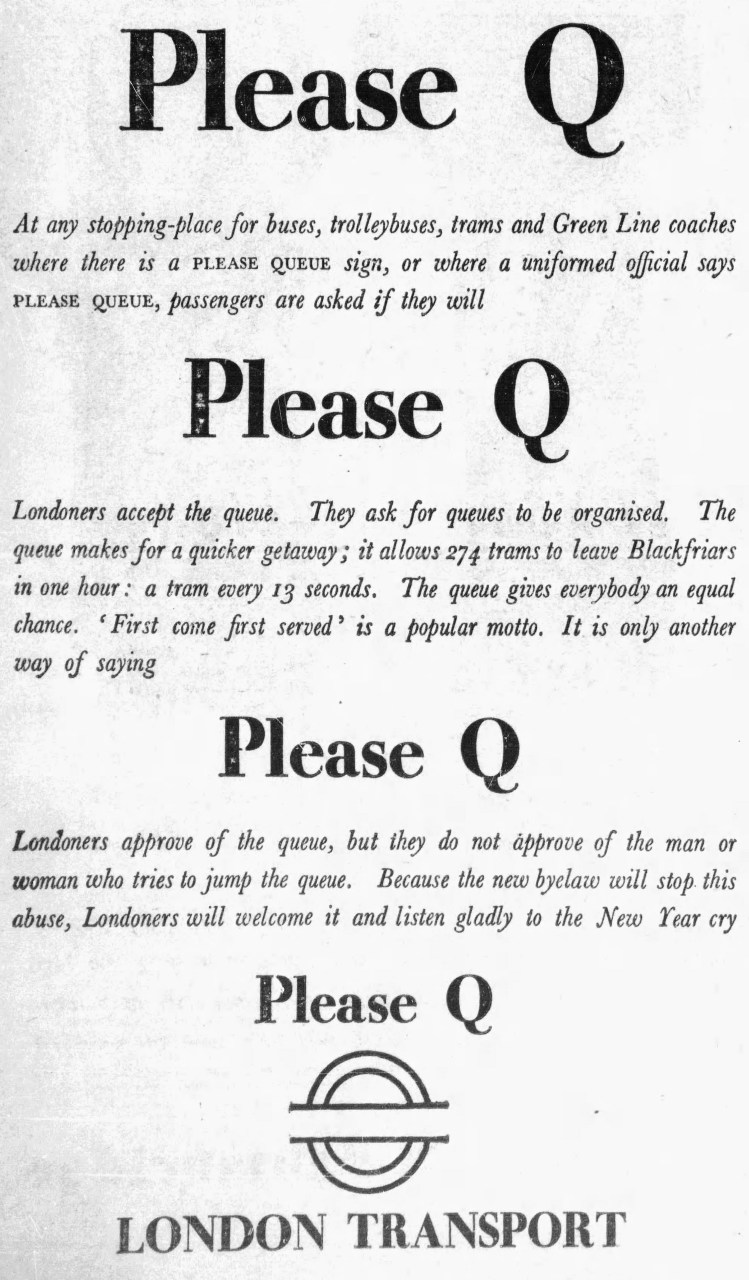
UK, 1920 (‘queue-jumper’)—literally: to push forward out of turn in a queue—figuratively: to obtain unfair priority over others—especially used since the 1930s in relation to compulsory queueing schemes implemented by public-transport authorities
1947—the unauthorised dumping of waste, especially while in the process of transporting it—‘fly’ refers to ‘on the fly’, meaning ‘while in motion or progress’—‘tipping’ is the gerund of the verb ‘tip’, in the sense ‘to dump’
UK, 1972—the offence of taking a car without the owner’s consent, especially for the purpose of joyriding, which was a social phenomenon prevalent in north-eastern England—acronym for ‘taking without owner’s consent’
literal meaning, 1473: something produced or manufactured—1534: an arduous task—1810: a commotion, a fuss—1623: ‘a filthy piece of work’ is applied to a person in Shakespeare’s Timon of Athens
dismissal from employment—UK, 1882, as ‘the noble order of the boot’—‘the boot’ refers to kicking somebody out—the phrase puns on two acceptations of ‘order’: an authoritative command and an institution founded for the purpose of honouring meritorious conduct
USA, 1839—the whole group or set of people, animals or things—origin unknown—perhaps from the Dutch expression ‘de hele kit en boedel’, meaning ‘the entire house and everything in it’
UK, 1710—in a situation in which any action one takes will have adverse consequences—‘cleft’, past participle of the verb ‘cleave’, means ‘split in two to a certain depth’—the image is of one being squeezed between the stick’s prongs

 word histories