meaning and origin of the phrase ‘to know how many beans make five’

to be sensible and intelligent—1784 in a US publication, but attributed to “a gentleman from abroad”—‘blue’, meaningless fanciful intensive, sometimes before ‘beans’
Read More
“ad fontes!”
to be sensible and intelligent—1784 in a US publication, but attributed to “a gentleman from abroad”—‘blue’, meaningless fanciful intensive, sometimes before ‘beans’
Read MoreAttested in 1761, ‘as the crow flies’ originally referred to the interior of a country; it did not originate in a practice of early navigation at sea.
Read Moreto avoid work, to shirk one’s duty—originated in military slang during the First World War, the word ‘column’ denoting a formation of marching soldiers
Read More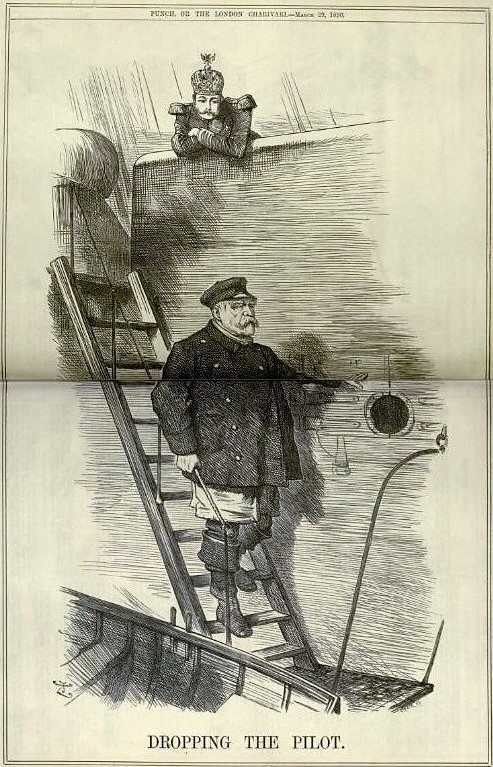
John Tenniel popularised the phrase in a cartoon depicting the dismissal of Otto von Bismarck, published in Punch (London) of 29 March 1890.
Read More
probably refers to pregnancy as an awkward condition, the image being apparently of an uncomfortable position at the top of a pole
Read MoreThe adjective ‘living’ is an intensifier, and ‘daylights’ is an 18th-century slang term for ‘eyes’ chiefly used in contexts of physical violence or threats.
Read More‘hell in a handbasket’ (1841), ‘heaven in a handbasket’ (1834) in Irish contexts—‘handbasket’ chosen for alliteration with ‘hell’—‘to go to hell in a handbasket’ meant ‘to go to hell’—‘to go to heaven in a handbasket’ meant ‘to go to heaven’ or ‘to go to hell’
Read MoreUK, 1857—characterised by savage violence or merciless competition—from Alfred Tennyson’s poem ‘In Memoriam’ (1850), in which ‘red in tooth and claw’ refers to Nature’s brutality
Read More‘the milk in the coconut’: a puzzling fact or circumstance; alludes to the question of how the milk got into the coconut—of British-English origin (1832), not of American-English origin as stated by the Oxford English Dictionary
Read More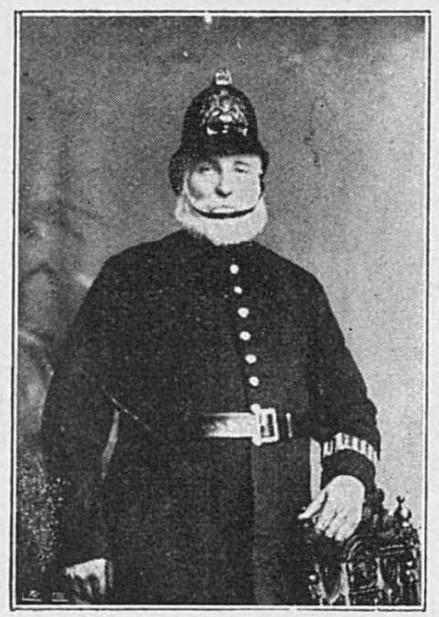
UK, 1844—‘bobby’: a policeman—from ‘Bobby’, pet form of ‘Robert’, in allusion to Robert Peel, who, as Home Secretary, established the Metropolitan Police in 1829—cf. ‘peeler’ (1816), originally a member of the Peace Preservation Force in Ireland established in 1814 by Robert Peel
Read More
