‘chatmate’: meaning and origin
1599—a person with whom one chats, a partner in informal or friendly conversation—now, more specifically: a person with whom one communicates via online chat or messaging
Read More
“ad fontes!”
1599—a person with whom one chats, a partner in informal or friendly conversation—now, more specifically: a person with whom one communicates via online chat or messaging
Read More1988, Australia & USA—apathy, indifference or mental exhaustion arising from exposure to too much information—especially stress induced by the attempt to assimilate excessive amounts of information from the media, the Internet or at work
Read More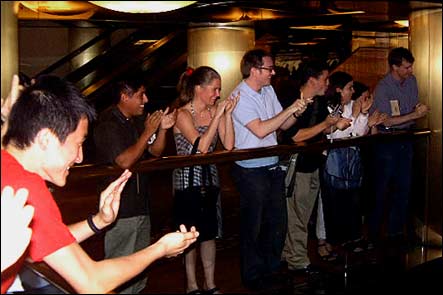
USA, 2003—a group of people organised by means of the internet, mobile phones or other wireless devices, who assemble in public to perform a prearranged action together and then quickly disperse
Read Moreto calm down and relax—a blend of ‘chill’ (to calm down and relax) and ‘relax’—however, explained in 1992 as a blend of ‘chill’ (to calm down and relax) and ‘max’ (to lounge, i.e., to lie, sit or stand in a relaxed or lazy way)
Read More
On the pattern of phrases such as ‘nom de guerre’, ‘nom de théâtre’ and ‘nom de plume’, ‘nom de —’ is used, often humorously, to form phrases denoting a pseudonym, an alternative name.
Read More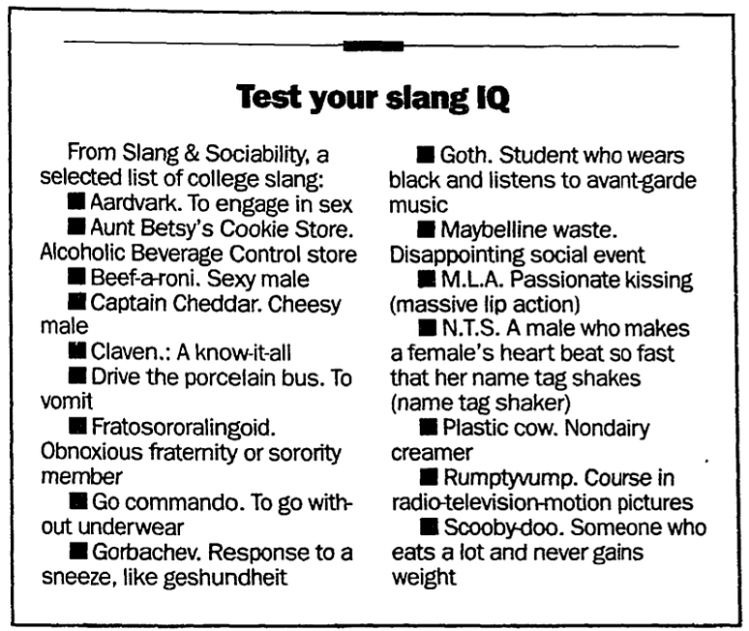
USA, 1974—to wear no underpants—originated in university slang—perhaps because commandos wear no underpants in order to prevent crotch rot and rashes
Read More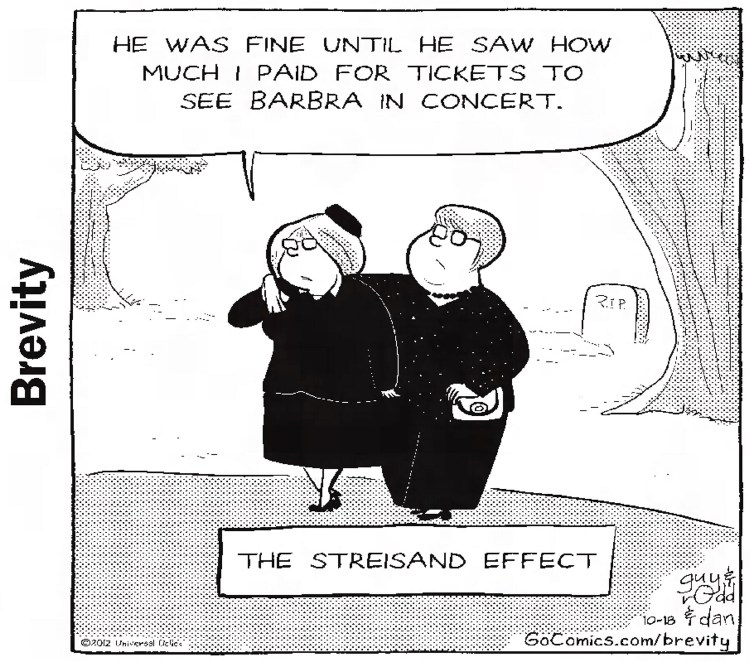
USA, 2005—coined by Mike Masnick on Techdirt.com—refers to Barbra Streisand’s counterproductive attempt in 2003 to ban a photo of her house
Read More‘eggcorn’: alteration of a word or phrase through the mishearing or reinterpretation of one or more of its elements as a similar-sounding word—coined in 2003 on the website Language Log with reference to a misinterpretation of ‘acorn’ as ‘eggcorn’
Read More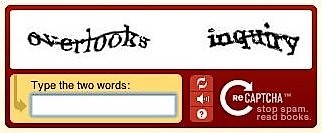
early 21st century—acronym from ‘Completely Automatic Public Turing test to tell Computers and Humans Apart’, with punning allusion to ‘capture’ and ‘gotcha’
Read More
UK, 1990s—either from Romany ‘čhavo’, an unmarried Romani male, a male Romani child, or from English or Anglo-Romany ‘chavvy’, a baby, a child
Read More word histories