‘little-girl-lost’ | ‘little-boy-lost’: meaning and origin
USA, early 1930s—adjectives—‘little-girl-lost’: resembling (that of) a small girl who has lost her way—‘little-boy-lost’: resembling (that of) a small boy who has lost his way
Read More
“ad fontes!”
USA, early 1930s—adjectives—‘little-girl-lost’: resembling (that of) a small girl who has lost her way—‘little-boy-lost’: resembling (that of) a small boy who has lost his way
Read Moreone who sews up wounds, i.e., a surgeon—also, in later use, a plastic surgeon—first recorded in ’Tis Pitty Shee’s a Whore (1633), by the English playwright John Ford
Read MoreUK, 1749—a playful bite on the skin from a lover; a kiss delivered with a sucking action, leaving a temporary mark on the skin, especially as a sexual act; a mark left on the skin by such a kiss
Read More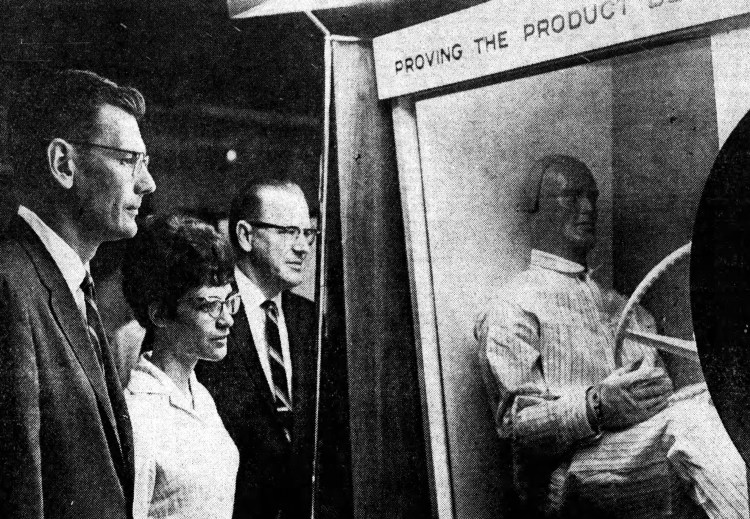
USA, 1955—a dummy used in vehicle safety tests to assess the effect of crashes, collisions, etc., on the driver and passengers of the vehicle—also, figuratively: a person or thing used as a test subject
Read More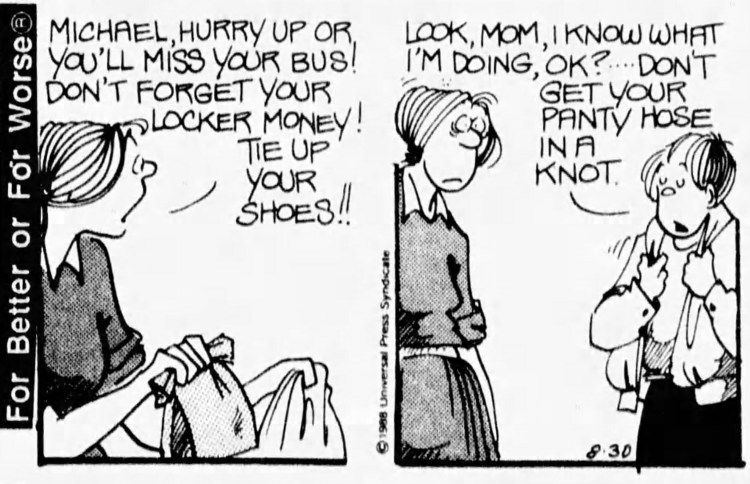
also ‘in a wad’, ‘in a knot’, etc.—to become unduly agitated or angry—the plural noun ‘panties’ refers to short underpants worn by women or girls—American English, 1975
Read MoreUK, mid-19th century—a circular curl of hair (sometimes artificial), usually pressed flat against the temple or forehead
Read Moremid-19th century—a small bonnet standing far back on the head, which was then fashionable—also occasionally in the extended form ‘kiss-me-quick, mother’s coming’
Read MoreAustralia & UK, 1856—a circular curl of hair (sometimes artificial), usually pressed flat against the temple or forehead
Read Moreto live in excessively close proximity or interdependence—1762: “the company squeezed themselves into one another’s pockets” in a letter by Horace Walpole
Read More‘stop talking (and get to the heart of the matter)’—UK, 1878—said to have been coined by circus proprietor Andrew Ducrow when apostrophising equestrian performers
Read More
