‘dry as a Pommy’s towel’: meaning and origin
Australia, 1981—very dry—alludes to the alleged poor personal hygiene of the British—here, the Australian noun ‘Pommy’ designates a British person
Read More
“ad fontes!”
Australia, 1981—very dry—alludes to the alleged poor personal hygiene of the British—here, the Australian noun ‘Pommy’ designates a British person
Read MoreUK, 1830—a happy or positive attitude that fails to notice negative things, leading to a view of life that is not realistic
Read MoreUK, 1857—This phrase was originally used by children to express or encourage an attitude of indifference to taunts, insults or other verbal abuse.
Read MoreUSA, 1959—a very tidy, well-organised person—a blend of the adjective ‘neat’ and of the noun ‘beatnik’—originally occurred chiefly in contrast to ‘beatnik’
Read MoreUK, 1993—meaning: influenced or determined by a person’s locality or postal address—in phrases such as ‘postcode discrimination’—frequently with reference to the unequal provision of healthcare
Read MoreUSA, 1938—(of hair) washed and rinsed so clean that it squeaks—by extension: completely clean—figuratively: above criticism, beyond reproach
Read More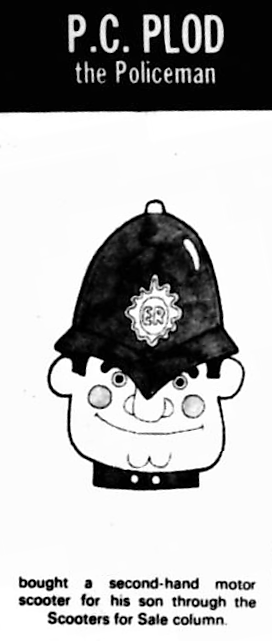
UK, 1963—‘Mr. Plod’, also ‘P.C. Plod’, ‘Plod’: a humorous or mildly derogatory appellation for a policeman or for the police—alludes to ‘Mr. Plod’, the name of the policeman in stories by the English author of children’s fiction Enid Blyton
Read More
USA, 1929—UK, 1933—in the phrase ‘a spare tyre around the waistline’, and its variants, the noun ‘spare tyre’ denotes a roll of fat
Read More
USA, 1978—a young woman or teenage girl who is regarded as sexually attractive, but unintelligent or frivolous—from ‘bimbo’ and the suffix ‘-ette’
Read MoreUSA, 1957—the rhythm method of birth control, as permitted by the Roman Catholic Church—with allusion to the unpredictable efficacy of this contraceptive method: from ‘Vatican’, denoting the authority of the Roman Catholic Church, and ‘Russian roulette’
Read More word histories