In French, the concept of dependency underlies the semantic distribution of some basic lexical items: the female is strictly defined in her relation of dependency to the male, as a daughter or as a spouse.
a gesture (made by a French person to deny responsibility, knowledge or agreement) consisting typically in shrugging one’s shoulders while upturning one’s hands
alludes to the belief that such a hat or cap protects the wearer from mind control, surveillance or similar types of threat—USA, 1972 as ‘tinfoil-lined hat’
a person or thing that is insignificant or contemptible—1910—originally (1900): a type of small high-velocity shell, with reference to the high-pitched sound of its discharge and flight
in French contexts: a young person, especially a young man, belonging to a youth subculture of the 1950s and 1960s—UK, 1959—from the noun ‘blouson’ (a short jacket) and the adjective ‘noir’ (black)
smartly dressed—from the verb ‘fig out/up’, meaning ‘to smarten up’—this verb is probably an alteration of the verb ‘feague’, of uncertain origin, meaning ‘to make (a horse) lively’
a difficult, uncooperative or unsociable person—UK, 1829—from French ‘mauvais coucheur’, literally ‘bad bedfellow’, with original allusion to a person whom a traveller had to share a bed with when stopping over at an inn
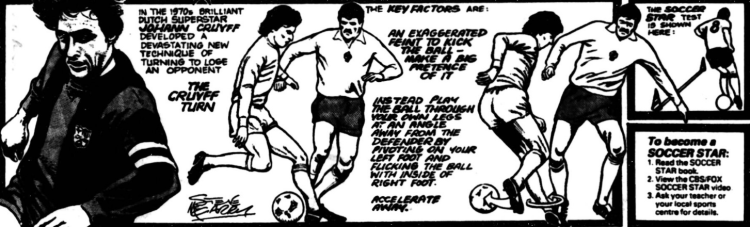
in soccer: a manoeuvre used by one player to evade another—UK, 1980s—refers to Dutch footballer Johan Cruyff, who first brought this manoeuvre to public attention by performing it in 1974
USA, 1981—said to have been invented by cheerleader ‘Krazy George’—popularised worldwide during the 1986 FIFA World Cup in Mexico, as a translation of Spanish ‘ola’—hence the British phrase ‘Mexican wave’ (1986)