notes on the phrase ‘life was not meant to be easy’—as used in Australia
1969—associated with Malcolm Fraser, Prime Minister of Australia from 1975 to 1983, who borrowed it from George Bernard Shaw’s Back to Methuselah (1921)
Read More
“ad fontes!”
1969—associated with Malcolm Fraser, Prime Minister of Australia from 1975 to 1983, who borrowed it from George Bernard Shaw’s Back to Methuselah (1921)
Read More
USA, 1942—has often been attributed to the Irish author George Bernard Shaw—has occasionally been applied to the relations between Australia and the USA
Read Moreexcessive reverence for William Shakespeare—1901, coined by George Bernard Shaw—from ‘the Bard’, an epithet of William Shakespeare, and the combining form ‘-olatry’, forming nouns with the sense ‘worship of’, ‘excessive reverence for’
Read Moredesignates an Englishman—originated among the French, from the fact that they regarded the exclamation ‘God damn’ as characteristic of the English—the Middle-French synonym ‘godon’ may be etymologically unrelated
Read Morea nickname given to London, which has, since the collapse of the Soviet Union, attracted Russian oligarchs—also used earlier in reference to Communism—modelled on Russian city names such as ‘Leningrad’ and ‘Stalingrad’
Read More
UK, 1872—the standard rules of boxing— figuratively: the standard rules of polite or acceptable behaviour—named after John Sholto Douglas, 8th Marquess of Queensberry, who supervised the preparation of the rules of boxing
Read More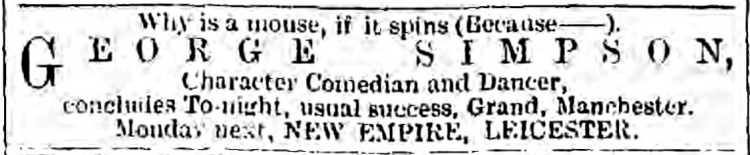
nonsensical question and answer—UK 1892—USA 1893—the question has been used to treat someone or something as unworthy of serious consideration
Read More
jocularly denotes a performance of Shakespeare’s Hamlet in its entirety—UK, 1946—all occurrences from articles by theatre critic J. C. Trewin (1908-1990)
Read More1911—‘Damaged Goods’, translation of ‘Les Avariés’, by French dramatist Eugène Brieux, about the dangers of ignorance concerning sexually transmitted diseases
Read Moreeuphemistic jocular variant of ‘not bloody likely’—UK, 1914—from the sensation caused by the use of the expletive ‘bloody’ in George Bernard Shaw’s ‘Pygmalion’
Read More word histories