UK, 1934—used of a person who pretends to be well-off despite having little money—the image is of a person who has expensive curtains on the windows of their house, but subsists on a diet of inexpensive fish
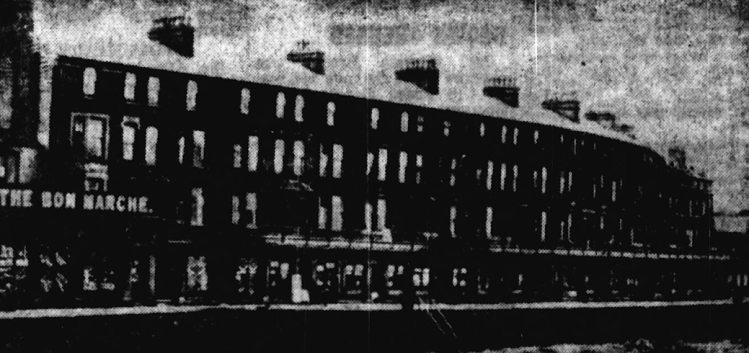
UK, 1880—a promenade at the seaside resort of New Brighton, in north-western England—alludes to the fact that cooked ham served with eggs was a popular dish at New Brighton’s eating-places
Scotland, 1941—of a person, manner of speaking, etc.: affectedly refined or cultivated, pretentious—from the fact that a pan-loaf (i.e., a loaf baked in a pan or tin, having a hard, smooth crust), being more expensive than a plain loaf, was considered a sign of affluence
UK, 1914—snobbish or supercilious—refers perhaps to ‘toff’, denoting a fashionable upper-class person—the image is perhaps of someone who, considering themself superior, keeps their nose high in contempt for the lower classes—cf. the form ‘toffy-nosed’ (1919)
UK, 1989—the practice of sending food destined for the British market for irradiation in a country, typically the Netherlands, where this process is permitted, in order to mask any bacterial contamination before it is put on sale—from ‘Dutch’ and the suffix ‘-ing’, forming nouns denoting an action
UK, WWII, army slang—‘spud-bashing’ (noun): potato-peeling; ‘spud-bash’ (verb): to peel potatoes; ‘spud-basher’ (noun): one who peels potatoes—those words have also been used with reference to potato-digging
military slang, 1944—a medal awarded to all members of a force—especially the 1939-1945 Star, awarded to British service personnel who took part in WWII—refers to the ubiquitousness of Spam as a foodstuff