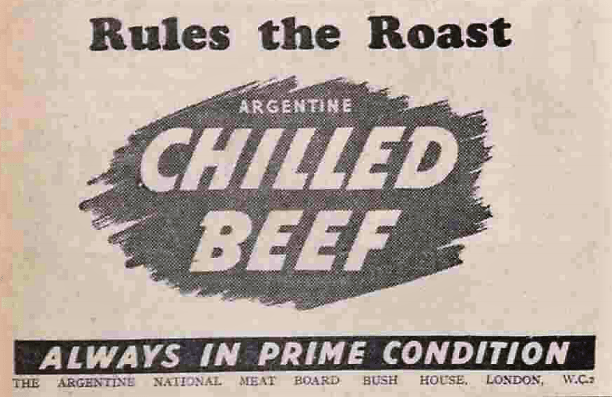
To rule the roost means to be in a dominating position over others. This phrase conjures up a picture of a cock lording it over a group of hens, i.e. a roost, in the farmyard, and appears to be similar to cock of the walk, which designates someone who dominates others within a group. But […]
The word tennis in its current sense is short for lawn tennis. The original form of tennis (known as real tennis to distinguish it from the later lawn tennis) was played with a solid ball on an enclosed court divided into equal but dissimilar halves, the service side (from which service was always delivered) and […]
The word helpmate means a helpful companion or partner, especially one’s husband or wife. This noun was originally helpmeet, about which the New English Dictionary (i.e. the Oxford English Dictionary – 1901 edition) explained the following: A compound absurdly formed by taking the two words help meet in Genesis, ii, 18, 20 (‘an help meet […]
MEANING a woman who dresses or behaves in a way that is considered tasteless and sexually provocative ORIGIN John Camden Hotten defined this word in Dictionary of modern slang, cant, and vulgar words (1864 edition): a term of approval applied by the London lower orders to a young woman for whom some […]
This word means a toilet, especially an outdoor one. The following is from A Dictionarie of the French and English Tongues (1611), by Randle Cotgrave: Retraict [modern French retrait]: masculine. An Aiax, Priuie, house of Office [= outdoor toilet]. It is a humorous respelling of a jakes, of same meaning, after Ajax, the name […]
The phrase ‘a pretty kettle of fish’ originally referred to a net full of fish, which, when drawn up with its contents, is suggestive of confusion, flurry and disorder—‘kettle’ being a form of ‘kiddle’, a noun denoting a dam or other barrier in a river, with an opening fitted with nets to catch fish.
It was only from the mere accident of his bearing the name that he did that the phrase ‘Hobson’s choice’ was applied to Thomas Hobson (1544-1631), an English liveryman who supposedly gave his customers no choice but to take the horse closest to the stable door or none at all. MEANING The […]
Donkey is a word of late appearance and of uncertain origin. It was first defined by the English antiquary and lexicographer Francis Grose (1731-91) in A Classical Dictionary of the Vulgar Tongue (1785): Donkey, donkey dick: a he, or jack ass, called donkey, perhaps from the Spanish or don-like gravity of that animal, entitled also the king […]
First recorded circa 1629 as ‘to rain dogs and cats’, this phrase is based on a cat-and-dog fight as a metaphor for a storm or hard rain; the theory that Jonathan Swift coined the phrase is ludicrous.