The phrase not to give, care or be worth a tinker¹’s curse, cuss² or damn (or elliptically a tinker’s) is an intensification of not to give, care or be worth a curse, cuss or damn, with reference to the bad language reputedly used by tinkers. The low repute in which tinkers were held is also […]
photograph: Farm Shop The noun mayonnaise denotes a thick, creamy sauce consisting of egg yolks emulsified with oil and seasoned, used as a cold dressing or accompaniment for salad, eggs, fish, etc., or as the base for other sauces. It is used in two French phrases: la mayonnaise prend, literally, the mayonnaise […]
The term thinking cap denotes an imaginary cap humorously said to be worn in order to facilitate thinking. The earliest instance that I have found is from the Western Carolinian (Salisbury, North Carolina) of 16th October 1821: We advise the editor to put his thinking-cap on, before he hazards another such assertion. The term also […]
The phrase cock-and-bull story denotes an implausible story used as an explanation or excuse. The French expression sauter du coq à l’âne, literally to jump from the cock to the (male) ass, means to skip from one subject to another, the image being that incoherent talking is like switching abruptly from the topic of the cock to that of […]
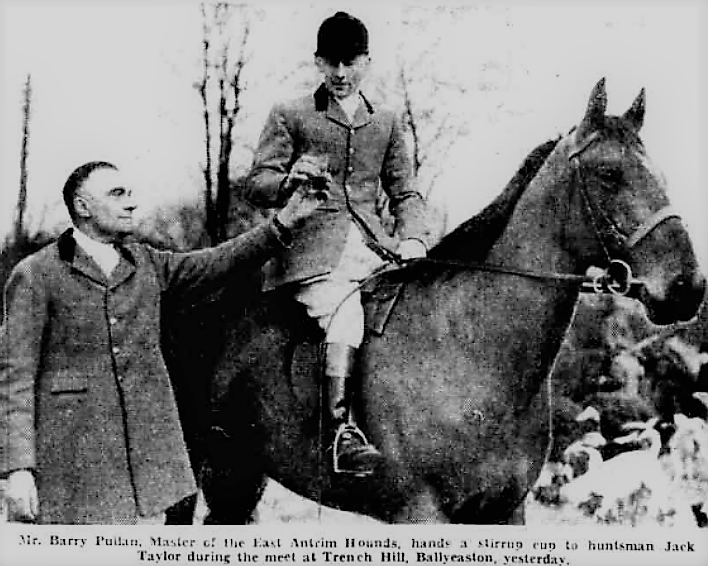
Huntsmen still use stirrup cup to designate an alcoholic drink offered to riders either as they are about to depart or when they return. Mr. Barry Puilan, Master of the East Antrim Hounds, hands a stirrup cup to huntsman Jack Taylor during the meet at Trench Hill, Ballyeaston, yesterday. from The Northern Whig and Belfast […]
‘blarney’: originally an allusion to the lies told by those who, having not reached the Blarney stone (in a castle near Cork), explained how they did reach it
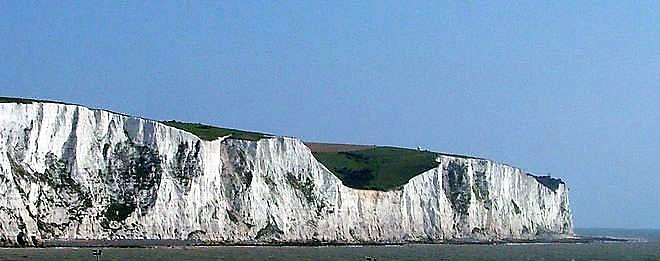
The white cliffs of Dover— to which the name Albion did not originally refer [cf. note]. (photograph: Wikimedia Commons/Fanny) The name Albion first appeared in English in the very first sentence of the first Book of the 9th-century translation of Historia ecclesiastica gentis anglorum (The Ecclesiastical History of the English People) originally written by the English monk, […]
The adjective teetotal in the sense of choosing, or characterised by, total abstinence from all alcohol seems to have first been used about September 1833 by Richard Turner, a worker from Preston, Lancashire, in a speech advocating total abstinence from intoxicating liquors, in preference to abstinence from ardent spirits only (as practised by some early […]
‘To fight like Kilkenny cats’ means ‘to engage in a mutually destructive struggle’.—from the tale of two cats fighting until only their tails remained (early 19th century), which was originally meant to be nothing but amusing nonsense.
MEANING The phrase to kick the bucket means to die—synonym: to pop one’s clogs. ORIGIN What is nowadays considered a folk etymology may well be the true origin: to kick the bucket quite possibly refers to suicide by hanging after standing on an upturned bucket. For example, the following was published in Jackson’s Oxford […]




 word histories