origin of ‘a millstone round someone’s neck’
from the gospel of Matthew, 18:6: If someone causes a child to sin, it would be better for them to have a millstone hung around their neck and be drowned in the sea.
Read More
“ad fontes!”
from the gospel of Matthew, 18:6: If someone causes a child to sin, it would be better for them to have a millstone hung around their neck and be drowned in the sea.
Read Moreearly 19th century—shortening of ‘to turn the deaf ear and the blind eye’ and variants
Read More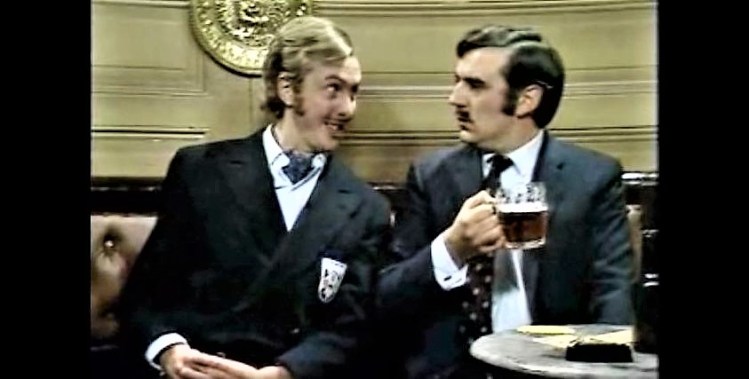
‘a nod’s as good as a wink (to a blind horse)’ 18th century—acknowledges that a hint or suggestion has been understood without the need of further elaboration
Read More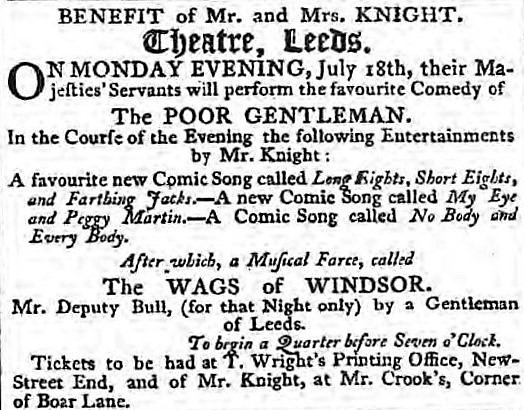
second half of the 18th century—a mere fanciful extension of ‘all my eye’—maintained in a sort of artificial life by persistent conjectures about its origin
Read More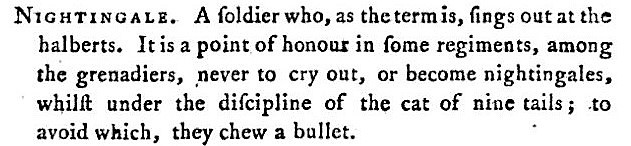
late 19th century—from the practice consisting, for a soldier, in biting on a bullet when being flogged
Read Morefrom the image of an impossible task, ‘to set the Thames on fire’: to work wonders — typically used negatively in the ironic sense never to distinguish oneself
Read More‘Once in a blue moon’ is a development from ‘once in a moon’, meaning ‘once a month’, hence ‘occasionally’—‘blue’ is merely a meaningless fanciful intensive.
Read More
coined by Charles Dickens in Nicholas Nickleby (1839) in a comic passage in which an insane speaker makes a series of nonsensical statements
Read MoreThe phrase perhaps originated in laws or customs regulating the gathering of firewood by tenants; it was perhaps a legal formula in which ‘crook’ merely reinforced ‘hook’.
Read More
probable origin: in 1642, during the English Civil War, Royalists had been captured at Birmingham and sent to Coventry, which was a Parliamentarian stronghold.
Read More word histories