1763 in French, 1798 in English—from the name of Étienne de Silhouette (1709-67), Controller-General of Finances in 1759—perhaps because he might have invented the portrait in profile obtained by tracing the outline of a head or figure by means of its shadow
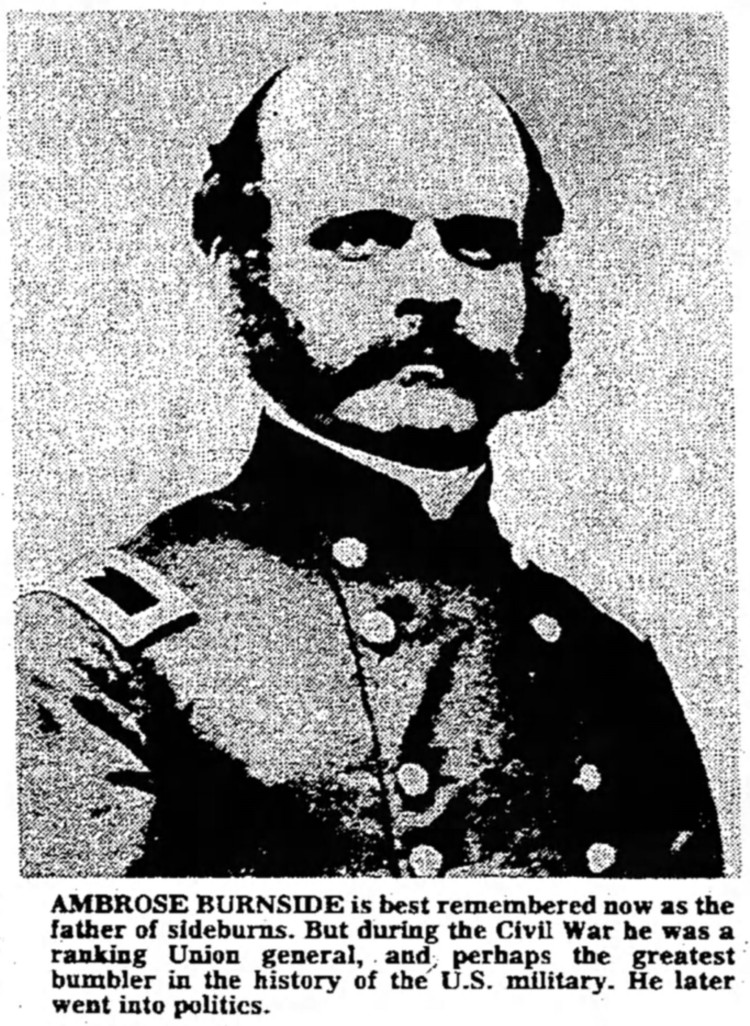
After Ambrose Burnside, Union general in the U.S. Civil War, ‘burnsides’ (1866) denotes thick side whiskers worn with a moustache and clean-shaven chin; on the pattern of ‘side whiskers’, it was altered to ‘sideburns’ (1875), itself altered to ‘sideboards’ (1882).
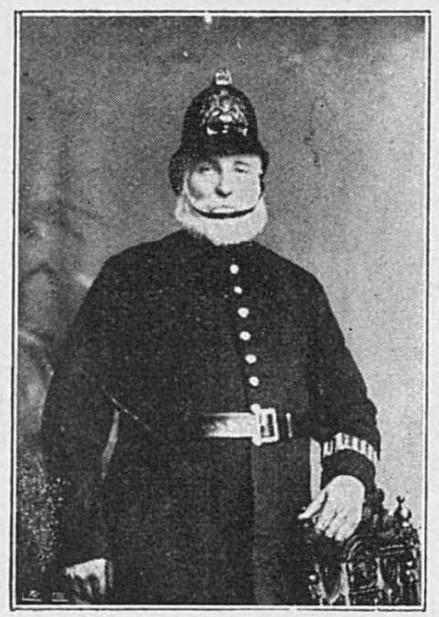
UK, 1844—‘bobby’: a policeman—from ‘Bobby’, pet form of ‘Robert’, in allusion to Robert Peel, who, as Home Secretary, established the Metropolitan Police in 1829—cf. ‘peeler’ (1816), originally a member of the Peace Preservation Force in Ireland established in 1814 by Robert Peel
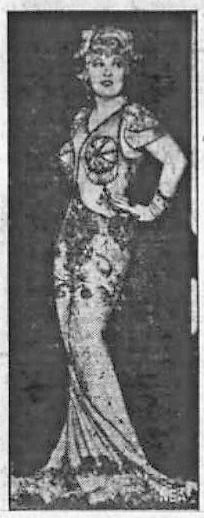
From the name of the American film actress Mae West, renowned for her generous bust, the informal noun ‘Mae West’, attested in 1940, denotes an inflatable life jacket, originally as issued to Royal Air Force aviators during World War II.
from the name of Mrs Malaprop, a character who confuses long words in The Rivals (1775), a comedy by the Irish playwright Richard Brinsley Sheridan—character named after ‘malapropos’, from the French locution ‘mal à propos’, literally ‘ill to purpose’
‘Atlantic’ originally referred to Mount Atlas in North Africa, on which the heavens were fabled to rest; it was hence applied to the sea near the western shore of Africa, and afterwards extended to the whole ocean lying between Europe and Africa on the east and America on the west.
Many centuries before becoming a nickname for New York City and the name of a fictional city associated with the Batman stories, Gotham was used in Britain as the name of a (probably fictional) village proverbial for the folly of its inhabitants.
‘Hobby’, diminutive of ‘Hob’, pet form of ‘Robert’, was used to denote a small horse, hence a child’s toy with a horse’s head, hence a favourite occupation—cf. French ‘dada’, child’s word for horse, used to denote a favourite pastime
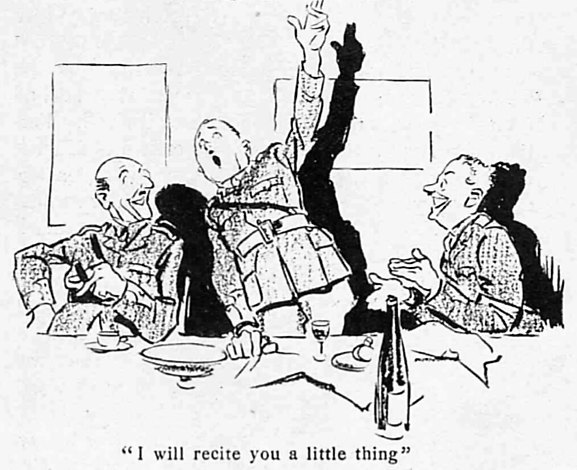
some characteristic slang creations of the British, U.S. and French soldiers during World War One, as recorded in ‘Trench Talk’, published in Everybody’s Magazine (New York) of January 1918
‘baloney’ or ‘boloney’: ‘humbug’ and ‘nonsense’—USA, 1922—American-English alteration of ‘bologna (sausage)’, a large smoked sausage made of seasoned mixed meats, from the name of Bologna, a city in northern Italy, where these sausages were first made



 word histories