The noun myrmidon denotes a follower or subordinate of a powerful person, typically one who is unscrupulous or carries out orders unquestioningly. This word first appeared in the plural forms Mirmydanes and Murmindones in The Laud Troy book, a poem about the siege of Troy composed around 1400. It is from the classical Latin plural […]
Le Rhesus (Simia Rhesus) – illustration by Jean-Baptiste Audebert for his treatise, Histoire naturelle des singes et des makis (1799) – image: Bibliothèque nationale de France / gallica.bnf.fr This word is from French rhésus, formerly rhesus, and from its etymon, the scientific Latin (Simia) Rhesus. In Histoire naturelle des singes et des makis (Natural […]
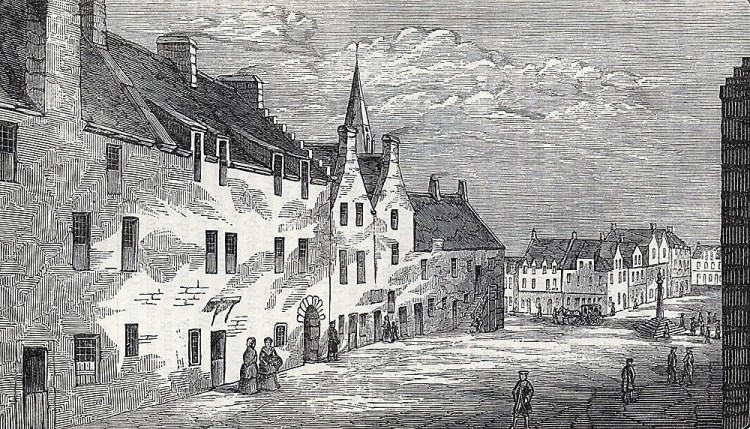
the Rotten-row in Glasgow, circa 1570 image: The Glasgow Story The street name Rotten Row occurs in many different towns. For example, The Caledonian Mercury (Edinburgh) of 10th December 1728 published the following advertisement: There is just come to Leith, a Parcel of fine Figs both in Casks and Frails [= baskets], […]
A drawing of Peeping Tom, in the exact state in which he is carved, but divested of all paint and superfluous ornaments. W. Reader in The Gentleman’s Magazine: and Historical Chronicle (London) of July 1826 The Coventry Peeping Tom statue, which dates from around 1500, survives today. Though it is now stripped down to […]
MEANING a heavy cotton pile fabric with lengthways ribs ORIGIN: UNKNOWN The original form of this noun, in the late 18th century, was corderoy. The earliest use of the word that I have found is from The Manchester Mercury (Manchester, Lancashire, England) of Tuesday 7th April 1772: […]
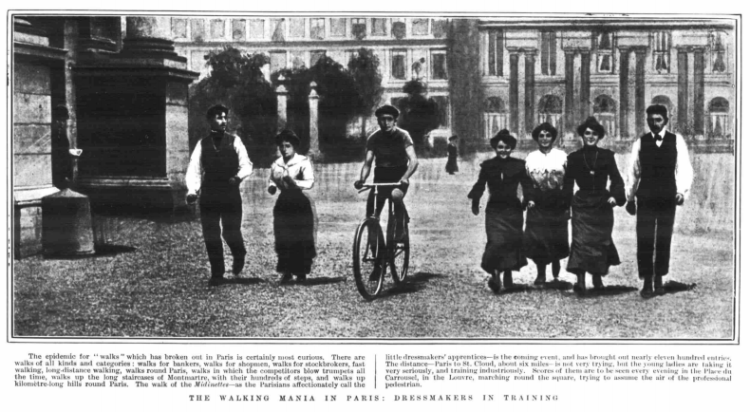
Phonetically and semantically similar to milliner, the French word midinette was defined as “a milliner’s female assistant, especially in Paris” in the 1933 Supplement to the New English Dictionary (as the Oxford English Dictionary was known). However, while milliner literally means a Milanese, a native or inhabitant of Milan, midinette is a portmanteau word, composed […]
A milliner is a person (generally a woman) who makes or sells women’s hats. But a Milliner was originally a native or inhabitant of Milan, a city in northern Italy. The word is first recorded in this sense in an Act of Parliament in 1449: That every Venician, Italian, Januey, Florentyn, Milener, Lucan, Cateloner, Albertyns, […]
MEANING a man unduly concerned with looking stylish and fashionable ORIGIN As it was originally in use on the Scottish Border at the end of the 18th century, dandy represents perhaps the name Andrew. (From Dandie Dinmont (i.e. Andrew Dinmont), the name of a character in Guy Mannering; or, The Astrologer (1815), […]
This word means a toilet, especially an outdoor one. The following is from A Dictionarie of the French and English Tongues (1611), by Randle Cotgrave: Retraict [modern French retrait]: masculine. An Aiax, Priuie, house of Office [= outdoor toilet]. It is a humorous respelling of a jakes, of same meaning, after Ajax, the name […]
It was only from the mere accident of his bearing the name that he did that the phrase ‘Hobson’s choice’ was applied to Thomas Hobson (1544-1631), an English liveryman who supposedly gave his customers no choice but to take the horse closest to the stable door or none at all. MEANING The […]




 word histories