Australia, 1879—With reference to the supposed destruction of the brain by white ants (i.e., termites), the plural noun ‘white ants’ is used of loss of sanity, sense or intelligence. (The singular noun ‘white ant’ occasionally occurred in early use.)
The obsolete Australian-English phrase to jump one’s horse over the bar, and its variants, meant to sell a horse for liquor. The following definition is from an unpublished manuscript entitled Materials for a dictionary of Australian Slang, collected from 1900 to 1910, by Alfred George Stephens and S. J. O’Brien—as quoted by Gerald Alfred Wilkes (1927-2020) in A […]
Australia—1954: a very unpleasant experience—originally, 1953: a particularly rough stretch of road on the 6,500-mile round-Australia Redex Reliability Trial of August-September 1953—hence, 1953: any particularly rough stretch of road
Australia, 1985—Coined after ‘corkage’, the noun ‘cakeage’ denotes, in a restaurant, the cutting and serving of a cake that has been brought in by a customer from off the premises, hence also a charge levied for this service.
USA—‘blue-sky talk’ 1900—‘blue-sky research’ 1947—the adjective ‘blue-sky’ is used to mean: (in negative sense) fanciful, hypothetical; (in positive sense) creative or visionary—from the notion of a blue sky as a place free from disturbances or difficulties
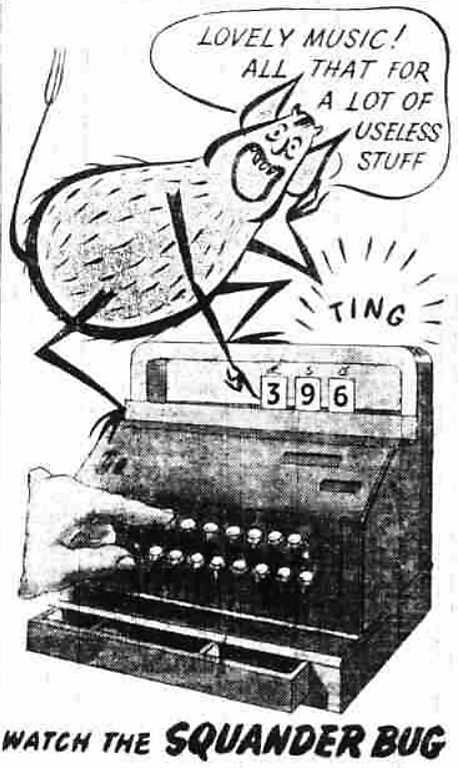
1943—a devilish insect symbolising reckless extravagance and waste—introduced by the National Savings Committee in a government publicity campaign promoting economy—hence: one who is profligate with money or resources
USA, 1843—With reference to a dog used for hunting game, this phrase is used to express the opinion that a particular plan or approach will not succeed.
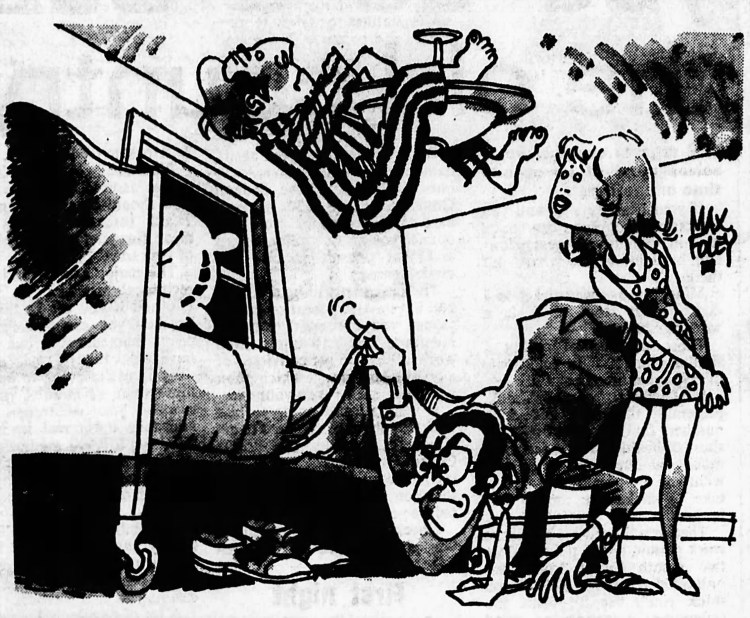
has been used to denote evidence of a de facto relationship affecting a woman’s eligibility for Social-Security benefits—refers to past practices of field officers inspecting homes and bedrooms
an artist or writer who produces what is considered to be inferior work simply to earn a living—loan translation from German ‘Brotkünstler’—first used in 1827 by Scottish historian and political philosopher Thomas Carlyle in a text about German literature
USA, 1856—to ask someone young, ill-equipped or inexperienced to do difficult or complicated work—this phrase usually occurs in negative contexts, especially as ‘never send a boy to do a man’s work’