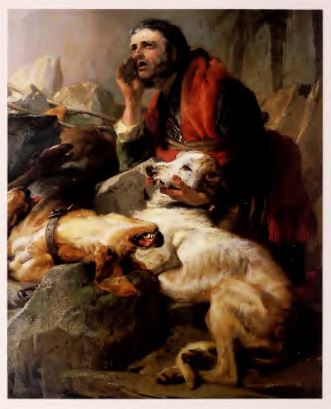
an assertion of continuing competence, strength, etc., notwithstanding evidence to the contrary—from the title of a painting by the British artist Edwin Landseer, first exhibited in 1838
a term of abuse or disparagement, especially for a man’s wife or female relative—1616 in Epicœne, or The Silent Woman, by Ben Jonson—perhaps in reference to an encumbrance, like a clog (i.e., a heavy piece of wood) tied to a dog
Australia & UK—denotes physical ugliness; also used of temporary states such as tiredness, hangover, anger, etc. (Australia, 1946)—also denotes rapidity (Australia, 1947)
the targeting of a potentially controversial message to specific voters while avoiding offending those voters with whom the message will not be popular—Canada, 1995—the image is that, like the sound made by a dog whistle, the message is only fully audible to those at whom it is directly aimed
UK, 1810—tenacious, persistent, obstinate—unwilling to yield, to relent or to let go—unable to set aside a preoccupation or obsession—the image is that a dog with a bone will not let go of that bone, no matter what
very cunning—New Zealand, 1908—‘Māori dog’: a dog of Polynesian origin; also any mongrel dog associated with Māori settlements or living in a wild state
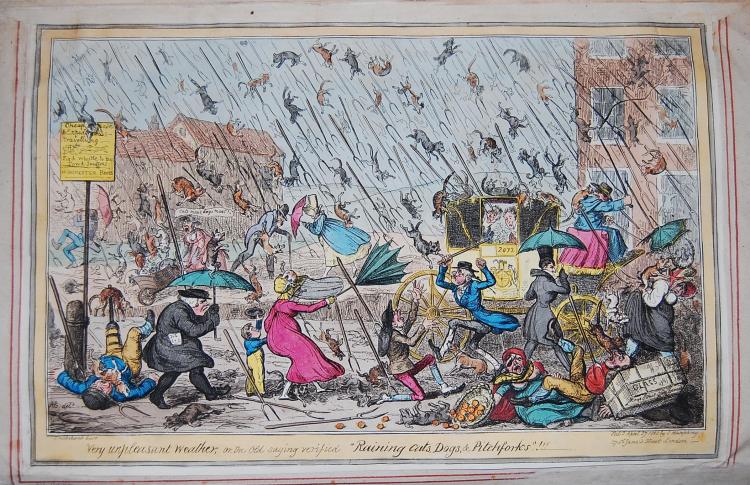
UK, 1856—jocular extension of ‘to rain cats and dogs’ (i.e., ‘to rain very hard’)—puns on the verb ‘hail’ (i.e., ‘to pour down like hail’) and the verb ‘hail’ (i.e., ‘to call out (a cab)’)

 word histories