‘council-house television’: meaning and origin

UK, 1993—derogatory—Sky Television Network, regarded as downmarket—alluded to the number of satellite dishes on council houses and council tower-blocks
Read More
“ad fontes!”
UK, 1993—derogatory—Sky Television Network, regarded as downmarket—alluded to the number of satellite dishes on council houses and council tower-blocks
Read Morethe killing of a woman or girl by a man—French ‘femmicide’: 1839; 1854 in the sense of a man who has killed a woman—English ‘femicide’: 1801; 1827 in the sense of a man who has killed a woman
Read MoreFrench, 1648: ‘famicide’; 1684: ‘femmicide’; 1695: ‘femmicide’—English, 1718: ‘femmicide’ (from French)—the killing of a woman or girl by a man
Read Morean entrepreneurial, ambitious woman; especially one who runs her own business—USA, 1895
Read More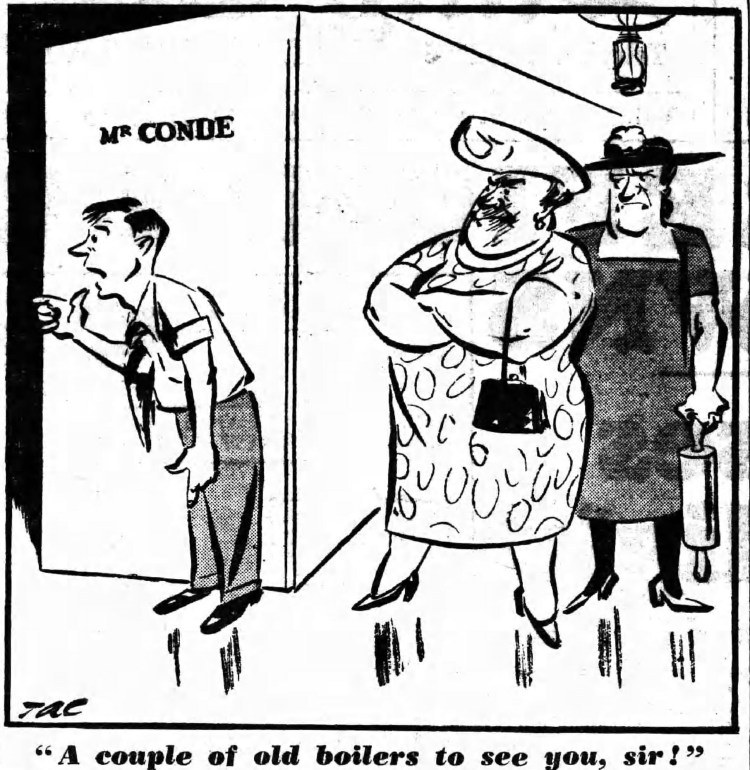
Australia, 1950—UK, 1962—derogatory and offensive: a middle-aged or elderly woman, especially one who is unattractive or unfeminine—refers to ‘boiler’, i.e., a tough old chicken for cooking by boiling
Read Morethe systematic destruction of Palestinian education by Israel—apparently coined in 2009 by Karma Nabulsi, Fellow in Politics at St Edmund Hall, University of Oxford
Read MoreUSA, 1906: a female attendant who shows people to their seats in a church—USA, 1907: a female usher at Oscar Hammerstein’s Manhattan Opera House—from ‘usher’ and the suffix ‘-ette’, forming nouns denoting women or girls linked with, or carrying out a role indicated by, the first element
Read MoreUK, 1915—a female worker in a munitions factory, especially during the First World War (1914-18)—from ‘munition’ and the suffix ‘-ette’, denoting women or girls linked with, or carrying out a role indicated by, the first element
Read MoreUK, 1839—France, 1843—the best people in a group, or the best type of a particular thing—a borrowing from French ‘crème de la crème’, literally ‘cream of the cream’
Read MoreAustralia, 1865 (nonce-use): the process of turning into a person of high social rank—UK, 1964 (coined by sociologist Ruth Glass): the process whereby middle-class people take up residence in a traditionally working-class area of a city
Read More word histories