meaning and origin of ‘to warm the cockles of one’s heart’
late 17th century—probably based on the resemblance between the shape of the heart and that of a cockleshell – or of the body the shell protects
Read More
“ad fontes!”
late 17th century—probably based on the resemblance between the shape of the heart and that of a cockleshell – or of the body the shell protects
Read More
UK, 1915—humorous blend of the common noun ‘mummer’ and of the name ‘Somerset’—denotes a pseudo-rustic dialect used by actors and an imaginary rustic county.
Read More1696—perhaps from ‘latet anguis in herba’ (a snake hides in the grass) in Virgil’s Eclogues—cf. ‘a pad [= toad] in the straw’ and French ‘il y a de l’oignon’
Read More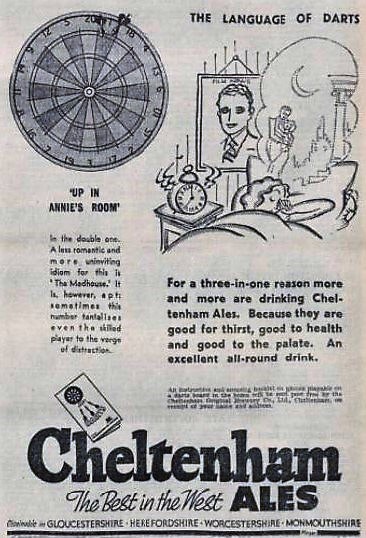
late 1910s: an answer to an enquiry as to the whereabouts of someone who cannot be found—1930s: the space at the top of the dartboard where scores are doubled
Read Moreattested 1699—from the hyperbolical phrase ‘to skin a flint’ (1656)—cf. ‘to skin a flea for its hide and tallow’ and French ‘tondre un œuf’ (‘to shave an egg’)
Read More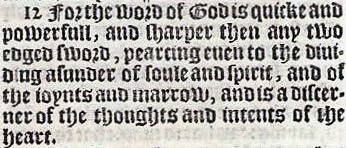
to serve both sides of an argument; to have both good and bad effects—England, early 18th century—refers to a sword which has two cutting edges
Read More
1790—from the name of a Quaker who must prove his identity against an impostor’s claims in ‘A Bold Stroke for a Wife’ (1718), a comedy by Susanna Centlivre
Read More
In Psalms, the subjugated nation of Moab is compared to a vessel used for washing the feet—hence in school slang ‘Moab’: humorous for ‘washroom’, ‘tub’, ‘sink’
Read MoreVia Irish ‘póg’, Irish-English ‘pogue’ (a kiss) is from ecclesiastical Latin ‘pacem’ (kiss of peace)—the name of the band is from ‘pogue mahone’ (kiss my arse).
Read More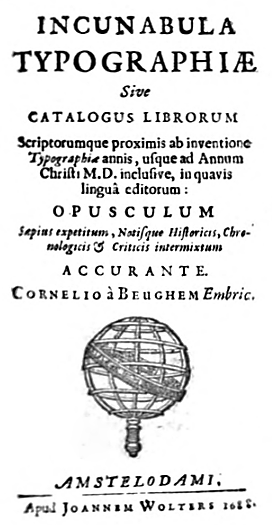
Latin ‘incunabula’: ‘swaddling clothes’, hence ‘beginning’—denotes the early printed books (from the 1450s to the end of the 15th century)
Read More word histories