the curious origin of ‘pie’ (baked dish)
perhaps identical to ‘pie’ (‘magpie’)—variety of ingredients maybe associated with bird’s spotted appearance or its tendency to collect miscellaneous articles
Read More
“ad fontes!”
perhaps identical to ‘pie’ (‘magpie’)—variety of ingredients maybe associated with bird’s spotted appearance or its tendency to collect miscellaneous articles
Read MoreUK, 1891—‘to take the mickey (or ‘the mike’) out of’: ‘to tease or ridicule’—probably after ‘Mickey (or ‘Mike’) Bliss’, rhyming slang for ‘piss’
Read MoreSince antiquity, European languages have variously named the butterfly, in particular by using sound reduplications expressive of its fluttering.
Read More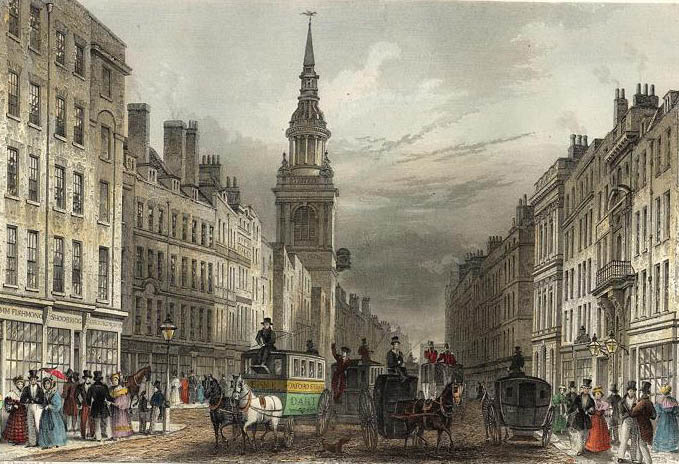
originally ‘pampered child’, later ‘town-dweller regarded as affected or puny’—origin uncertain—probably not the same word as ‘cokeney’, literally ‘cock’s egg’
Read More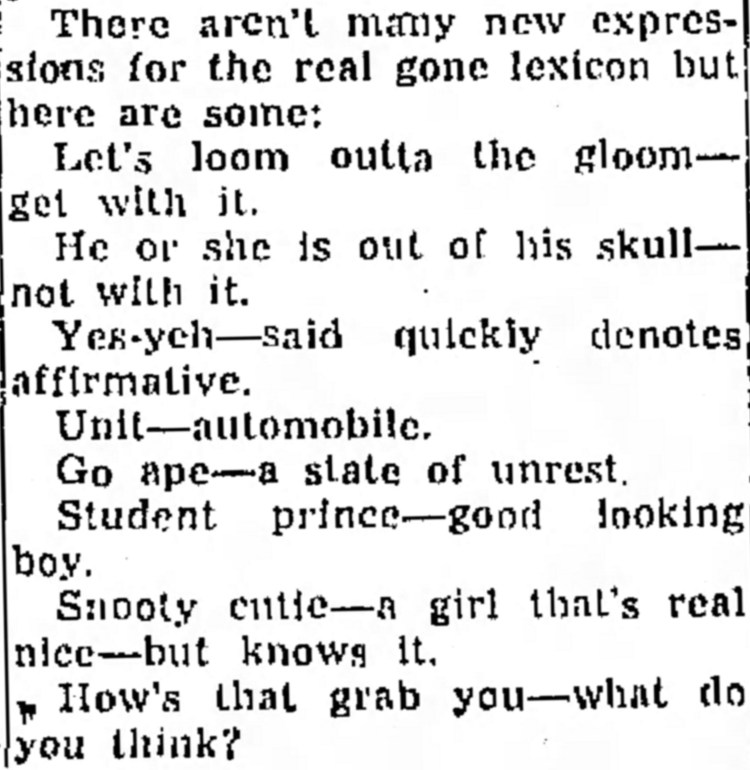
USA—‘not part of a particular exclusive group’, 1955—‘out of one’s mind’, 1958—‘smashed out of one’s skull’ (= ‘drunk’, 1963)—‘bored out of one’s skull’, 1967
Read More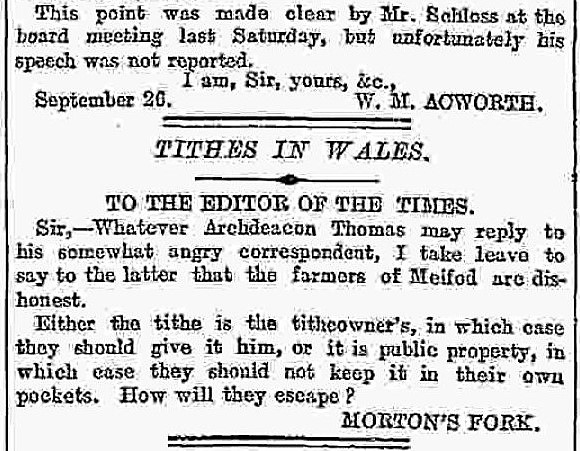
an argument said to have been used by John Morton in levying forced loans: a person living well was obviously rich; one living frugally must have savings
Read Moreearly 19th century—probably a jocular application of ‘forty’ as an indefinite term for a large number—‘wink’ in the sense of ‘a closing of the eyes for sleep’
Read More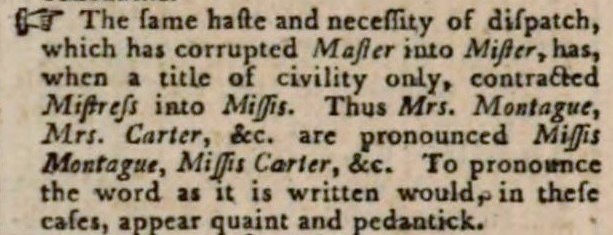
‘Mr’-‘Mrs’: originally abbreviations of ‘master’-‘mistress’—‘mister’-‘missus’: renderings of the altered pronunciations of ‘master’-‘mistress’ in ‘Mr’-‘Mrs’
Read More
‘miss’: unmarried woman or girl; 17th cent., short for ‘mistress’—‘Ms’: title free of reference to marital status; 20th cent., blend of ‘Mrs’ and ‘Miss’
Read More
‘something new can only be judged to be good or bad after it has been tried or used’ (‘proof’ = ‘test’)—1623, in Remaines, concerning Britaine, by W. Camden
Read More word histories