‘Coggeshall job’: meaning and origin
any muddle-headed business—UK, 1813—the stupidity of the people of Coggeshall, a small town in Essex, England, has been proverbial since the mid-17th century
Read More
“ad fontes!”
any muddle-headed business—UK, 1813—the stupidity of the people of Coggeshall, a small town in Essex, England, has been proverbial since the mid-17th century
Read Moresaid to console a child choking over his or her food—UK, obsolete—first recorded in A Complete Collection of Genteel and Ingenious Conversation (1738), by Jonathan Swift
Read More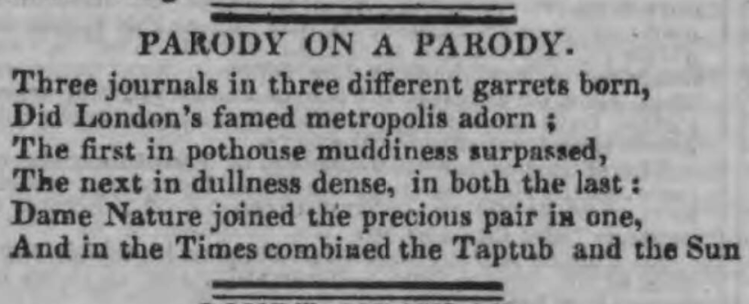
The Times: nicknamed Thunderer—the Morning Advertiser: Gin-and-Gospel Gazette, Tap-tub—The Morning Post: Jeames—The Morning Herald and The Standard: respectively Mrs Harris and Mrs Gamp
Read Moreapplied to someone who will drink anything—UK, 1790—from the tale of the sailor(s) who stole spirits from the cask in which a dead Admiral was being preserved for interment in England
Read MoreUK—applied to dark clouds looming—originally (1927) ‘over Will’s mother’s’ denoted the west—origin unknown
Read More‘anything for a quiet wife’ (1875)—jocular variant of ‘anything for a quiet life’ (ca. 1620), which expresses concession or resigned agreement, to ensure one is not disturbed
Read Moreto praise oneself—first used by Benjamin Franklin in 1729—the image is that, when one’s trumpeter is dead, one is forced to find one’s own trumpet
Read Moretwo people, especially lovers, should be left alone together—UK, 1829 as ‘two is company, three none’—but notion already proverbial in 1678
Read Moreto be mistaken or disappointed—USA,1840, as ‘you shot your granny in the eye with a baked apple’
Read More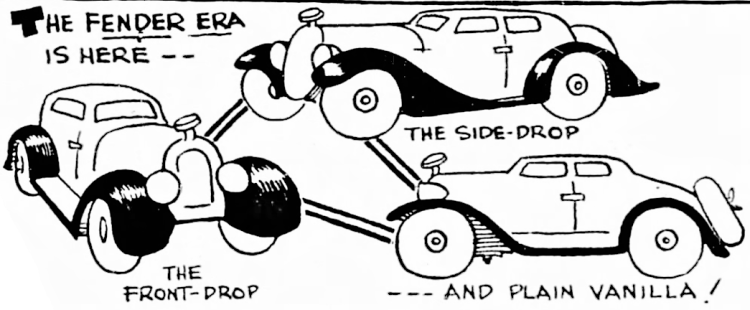
from the popular perception of vanilla as the ordinary, bland flavour of ice-cream—USA—‘plain vanilla’ 1934—‘vanilla sex’ 1960
Read More word histories