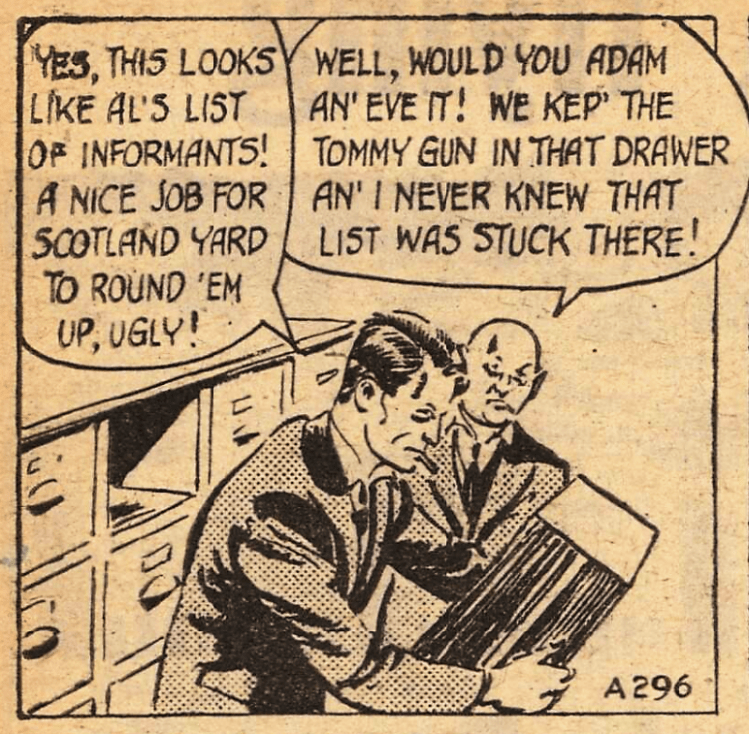
UK, 1925—the verb ‘Adam and Eve’ is rhyming slang for ‘to believe’—there is no truncation, contrary to the usual rhyming-slang formation (cf. ‘scooby’, rhyming slang for ‘clue’, which is short for ‘Scooby Doo’)
UK and USA, 1816—to tell a long, far-fetched story—of nautical origin? (perhaps alludes to making ropes from lengths of yarn on board ship: the men would have told one another stories while performing this long and tedious task)
1747—a small outlay or risk ventured in the hope or expectation of a significant return—a metaphor from fishing, in which sprats are used as bait to catch larger fish—in early use with the words ‘salmon’ and ‘herring’ instead of ‘mackerel’
Scotland, 1806—to make a determined effort to achieve something, whether ending in success or failure—refers to the making of spoons out of the horns of cattle or sheep, which was common in Scotland till late in the 19th century
Ireland, 1889—emphasises the truthfulness and sincerity of what one is saying—derives from a children’s oath which involved licking a finger, drying it, and drawing it across the throat while saying “My finger’s wet. My finger’s dry. Cut my throat if I tell a lie.”
UK, 1773—physical cleanliness betokens spiritual purity, i.e., cleanliness proceeds from piety—apparently, this phrase is erroneously ascribed to the English preacher and co-founder of Methodism John Wesley
The humorous expression ‘elbow grease’ (1639) denotes vigorous physical labour, especially hard rubbing. The corresponding French expression is ‘huile de coude’ (1761), literally ‘elbow oil’.
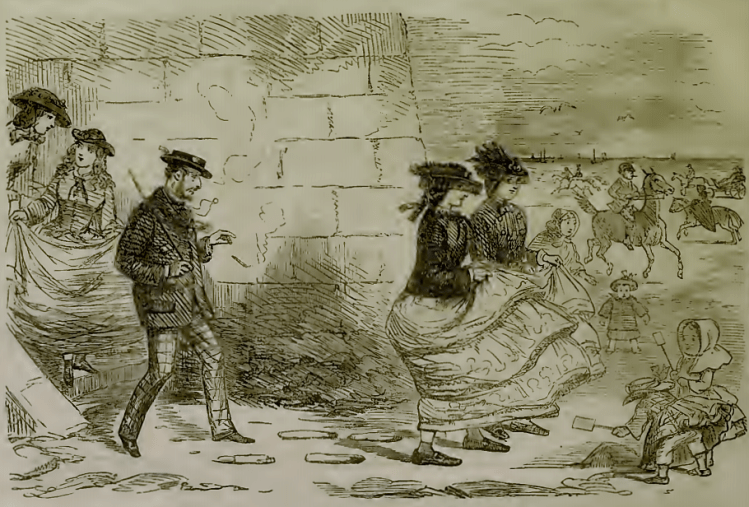
denotes a foot or a boot, especially a big one—1856, in the caption to a cartoon by John Leech, published in Punch (London, England): “A vulgar and disgusting expression, implying that a foot is big enough, and flat enough, to kill Black-beetles”
Lancashire, England, 1973—a wasted journey; a weird way of behaving; a fit of ill temper—origin unknown—one hypothesis is that when wine boats from the Mediterranean arrived in Liverpool, the wine was occasionally sour and therefore useless
USA, 1812—UK, 1818—the name of a character proverbially said to have been so great a liar that he was expelled from Hell—hence, frequently in ‘a bigger liar than Tom Pepper’, and variants: an outrageous liar


 word histories