Australia, 1972—a jocular curse—the Australian National Dictionary Centre explains that this phrase “recalls an earlier time when many Australians kept chooks (domestic chickens) in the backyard and the dunny was a separate outhouse”
Australia, 1954—derogatory nickname for the metal eagle at the top of the Australian-American Memorial in Canberra—alludes to the fact that, from a distance, the eagle’s upswept wings look like a rabbit’s ears
UK—1969: a type of collapsible trolley designed for use in the home—1970: a thing whose name the speaker cannot remember, does not know, or does not wish to mention—perhaps from ‘oojah’, ‘-ma-’ in nouns such as ‘thingamabob’, and the verb ‘flip’
no money, nothing—UK, 1864, in a text by the British scholar D’Arcy Wentworth Thompson—from ‘n-’ in the determiner ‘no’, meaning ‘not any’, and ‘-uppence’ in ‘tuppence’
USA, 1959—a very tidy, well-organised person—a blend of the adjective ‘neat’ and of the noun ‘beatnik’—originally occurred chiefly in contrast to ‘beatnik’
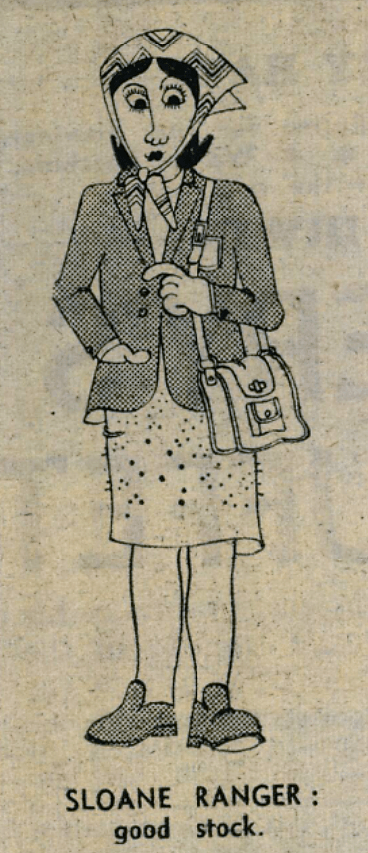
UK, 1975—an upper-class and fashionable, but conventional, young woman in London—blend of ‘Sloane Square’, the name of a square located in an affluent area of London, and ‘Lone Ranger’, the name of a well-known hero of western stories and films
UK, 1912—humorous: a Jewish person—refers to the Crossing of the Red Sea, as recounted in the Book of Exodus—coined on various occasions by different persons, independently from each other