origin of ‘hatchet man’: a hired Chinese assassin
USA—‘hatchet man’ (1874): a hired Chinese assassin using a hatchet or cleaver—‘hatchet work’ (1895): a murder carried out by a hatchet man
Read More
“ad fontes!”
USA—‘hatchet man’ (1874): a hired Chinese assassin using a hatchet or cleaver—‘hatchet work’ (1895): a murder carried out by a hatchet man
Read MoreUK, 1934—image said to have been first used by Lenin about the Russian soldiers who were abandoning the war during the Russian Revolution of 1917
Read Moreprimary meaning of ‘boggle’ was ‘to start with fright’, originally with reference to horses—probably related to the nouns ‘bogle’ and ‘bogey’, denoting an evil spirit such as horses are reputed to see
Read More‘to know where the bodies are buried’: to have personal knowledge of the secrets or confidential affairs of an organisation or individual—USA, 1928, as ‘to know where the body is buried’
Read Moreused with reference to a conventional or idealised romance—originated (USA, 1931) in cinematographic plot summaries in which ‘boy meets girl’ featured
Read Morerobotically conformist or obedient—from The Stepford Wives (1972 novel by Ira Levin and 1975 film adaptation by Bryan Forbes), in which Stepford is the name of a superficially idyllic suburb where the men have replaced their wives with obedient robots
Read More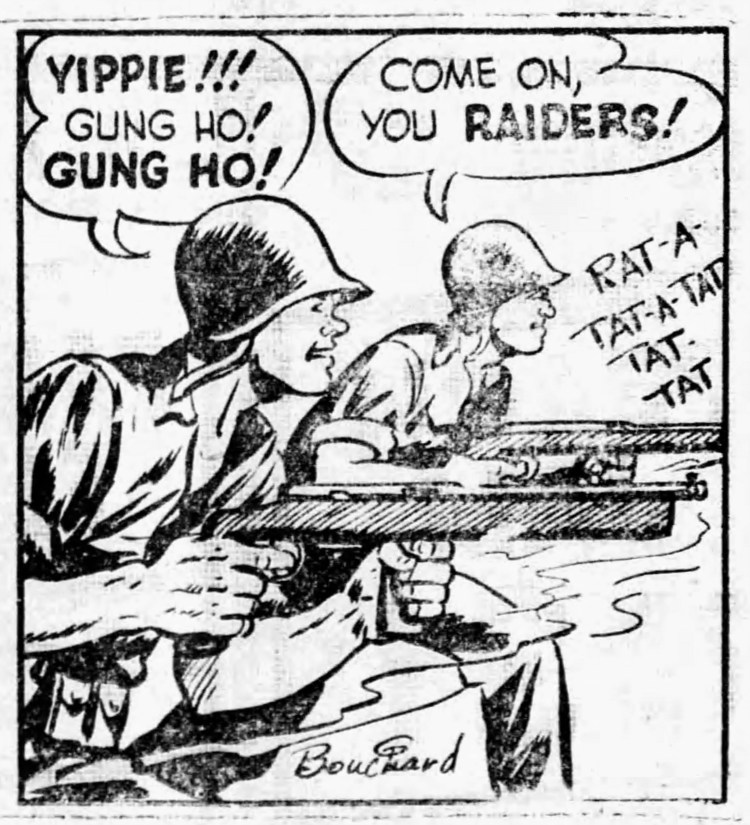
from Chinese ‘gōnghé’, short for ‘Zhōngguó Gōngyè Hézuò Shè’ (Chinese Industrial Cooperative Society)—interpreted as a slogan meaning ‘work together’ (USA, 1941)—adopted by Evans F. Carlson, commander of the 2nd Marine Raider Battalion (1942)
Read Morefirst recorded in the United Kingdom in 1914, with reference to the civilizational implication of the German invasion of Belgium at the beginning of World War One; therefore, not first used by Orson Welles in Citizen Kane (1941)
Read MoreUK, 1967—chiefly British—‘bums on seats’: the members of an audience, at a theatre, cinema or other place of entertainment, especially when viewed as a source of income
Read MoreUSA, 1946—‘to have, or to get, egg on one’s face’: to be, or to get, embarrassed or humiliated by the turn of events—refers either to having eggs thrown at one’s face or to yolk stains left on the face after the careless eating of a soft-boiled egg
Read More
