UK, 1935—a humorous self-contradictory phrase which includes the clichéd phrase ‘to avoid like the plague’ in order to express the necessity of avoiding clichés—as a piece of advice for writers, has itself become a cliché
USA, early 1930s—adjectives—‘little-girl-lost’: resembling (that of) a small girl who has lost her way—‘little-boy-lost’: resembling (that of) a small boy who has lost his way
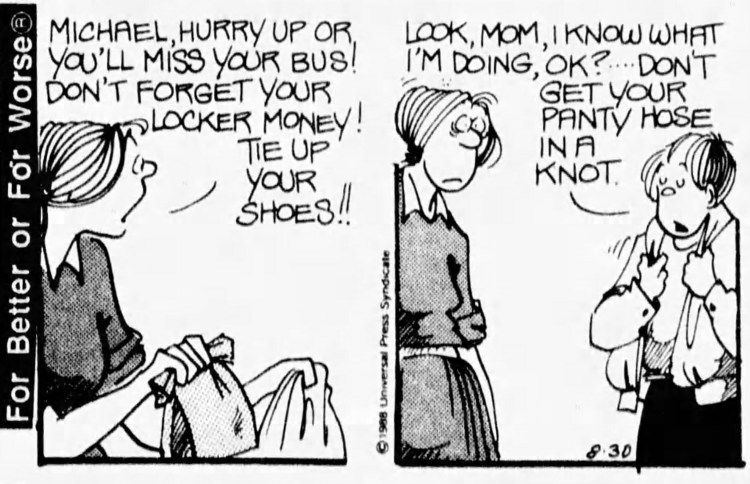
also ‘in a wad’, ‘in a knot’, etc.—to become unduly agitated or angry—the plural noun ‘panties’ refers to short underpants worn by women or girls—American English, 1975
one who rides a surfboard with the right foot forward instead of the left—USA, 1960 (as a verb)—here, ‘goofy’ seems to be related to prejudice against left-handedness and left-footedness
USA, 1937—informative material presented in an entertaining way at working-meetings (and later at other types of gatherings) organised by Shell Oil Company—a blend of ‘information’ and ‘entertainment’
Australia, 1970—as a noun and as a verb, refers to a high-speed drive in a motor vehicle—from the surname of the Argentinian motor-racing driver Juan Manuel Fangio

 word histories