the Bloody Mary before the name existed
Unnamed cocktails consisting of vodka and tomato juice became fashionable in the 1930s before the name ‘Bloody Mary’ was coined in November 1939.
Read More
“ad fontes!”
Unnamed cocktails consisting of vodka and tomato juice became fashionable in the 1930s before the name ‘Bloody Mary’ was coined in November 1939.
Read Moreattested in the Later Version (1395) of the Wycliffe Bible—‘ghost’ means ‘the soul or spirit, as the principle of life’
Read More‘hell in a handbasket’ (1841), ‘heaven in a handbasket’ (1834) in Irish contexts—‘handbasket’ chosen for alliteration with ‘hell’—‘to go to hell in a handbasket’ meant ‘to go to hell’—‘to go to heaven in a handbasket’ meant ‘to go to heaven’ or ‘to go to hell’
Read MoreIn the phrase ‘sleep tight’ (USA, 1873), the adjective ‘tight’ is used as an adverb meaning ‘soundly’, i.e. ‘deeply and without disturbance’, as in the combination ‘tight asleep’ (USA, 1847).
Read MoreUK, 1857—characterised by savage violence or merciless competition—from Alfred Tennyson’s poem ‘In Memoriam’ (1850), in which ‘red in tooth and claw’ refers to Nature’s brutality
Read Moreoriginally: a child wearing the house key tied around their neck and staying in the streets while their mother is at work—USA, 1935: a poor Afro-American woman’s child—USA & UK, WWII: a child whose mother was engaged in war industry
Read MoreUSA, 1901—Especially in ‘to have them rolling in the aisles’, the colloquial phrase ‘in the aisles’ is used in various expressions to suggest a wildly enthusiastic reaction, especially uncontrollable laughter, on the part of an audience.
Read More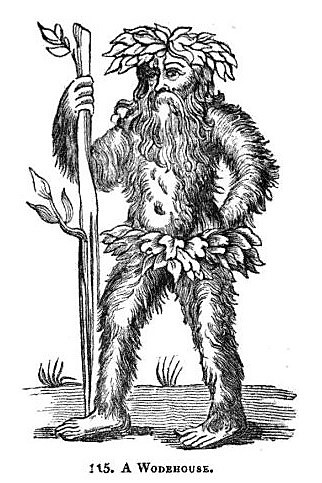
three meanings: 1/ in outdoor pageants: a man dressed in greenery, representing a wild man of the woods—2/ in inn names and signs: a forester—3/ in medieval English churches: a representation of a man’s face composed of, surrounded by, or sprouting foliage or branches
Read MoreUK, 1831—to startle or upset a sedate or conventionally-minded community—most probably from the following lines in The Tragedy of Coriolanus (circa 1607), by William Shakespeare: “like an eagle in a dove-cote, I | Flutter’d your Volscians in Corioli”
Read MoreUSA, Boston Morning Post, 26 May 1834—‘Dutch uncle’: a person giving firm but benevolent advice—unknown origin—perhaps an allusion to Calvinistic sternness
Read More
