USA, 1901—Especially in ‘to have them rolling in the aisles’, the colloquial phrase ‘in the aisles’ is used in various expressions to suggest a wildly enthusiastic reaction, especially uncontrollable laughter, on the part of an audience.
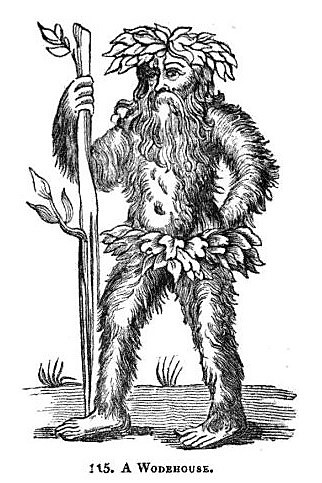
three meanings: 1/ in outdoor pageants: a man dressed in greenery, representing a wild man of the woods—2/ in inn names and signs: a forester—3/ in medieval English churches: a representation of a man’s face composed of, surrounded by, or sprouting foliage or branches
UK, 1831—to startle or upset a sedate or conventionally-minded community—most probably from the following lines in The Tragedy of Coriolanus (circa 1607), by William Shakespeare: “like an eagle in a dove-cote, I | Flutter’d your Volscians in Corioli”
USA, Boston Morning Post, 26 May 1834—‘Dutch uncle’: a person giving firm but benevolent advice—unknown origin—perhaps an allusion to Calvinistic sternness
‘double Dutch’, 19th century—from ‘Dutch’ in the sense of a language that few people can speak, and ‘double’ as a mere intensifier—‘High Dutch’, 17th century—loan translation from French ‘haut allemand’ (= ‘High German’), used in the sense of gibberish
UK, 1967—chiefly British—‘bums on seats’: the members of an audience, at a theatre, cinema or other place of entertainment, especially when viewed as a source of income
from classical Latin ‘urbī’, dative of ‘urbs’ (city), and ‘orbī’, dative of ‘orbis’ (orb, circle)—in classical Latin, ‘orbis terrarum’, ‘orbis terrae’, the orb, or circle, of the earth, meant by extension the world, since the ancients regarded the earth as a circular plane or disk
first recorded in a speech by Rev. George W. Bethune, transcribed in ‘Brief abstract of the fourth annual report of board of Managers of the New-York city Colonization Society’, published in ‘The American Christian Instructor’ of April 1836
16th century—from the Latin adjective ‘praeposterus’, composed of the adverb ‘prae’ (‘in front’, ‘before’) and the adjective ‘posterus’ (‘coming after’, ‘following’, ‘next’), so that its literal sense is ‘next (placed) first’, ‘having first what should be coming after’.
Italian translation of Latin ‘in pectore’ (‘in the breast’, ‘in the secret of the heart’)—when a pope announces that he has appointed a cardinal whom he reserves ‘in petto’, it means that he will reveal this cardinal’s name later

 word histories