‘(as) cold as Pharaoh’s heart’: meaning and origin
USA, 1876—‘extremely cold’—cf. ‘as hard as Pharaoh’s heart’ (USA, 1829), meaning ‘extremely hard’—both phrases refer to the hardening of Pharaoh’s heart in the Book of Exodus, 7:13-22
Read More
“ad fontes!”
USA, 1876—‘extremely cold’—cf. ‘as hard as Pharaoh’s heart’ (USA, 1829), meaning ‘extremely hard’—both phrases refer to the hardening of Pharaoh’s heart in the Book of Exodus, 7:13-22
Read MoreThis proverb means that promises and plans must be put into action, otherwise they are useless. The early versions did not refer to hell or the road to hell being paved, but to hell being full of good desires, intentions, meanings, etc.
Read MoreUSA (New England), 1868—alternately sunny and cloudy conditions usually indicate rain—the adjective ‘shet’ is a variant of ‘shut’—it was perhaps in order to provide a rhyme for the adjective ‘wet’ that the variant ‘shet’ was chosen in the proverb
Read MoreIreland, 1809—the Wednesday before Easter—refers to the day on which Judas Iscariot formed the intent to betray Jesus—‘spy’ denotes ‘one who spies upon, or watches, a person or persons secretly’, because, from Wednesday onwards, Judas Iscariot secretly sought an opportunity to deliver Jesus to the Jewish authorities
Read MoreUK, 1773—physical cleanliness betokens spiritual purity, i.e., cleanliness proceeds from piety—apparently, this phrase is erroneously ascribed to the English preacher and co-founder of Methodism John Wesley
Read MoreUSA, 1871—The phrase ‘a whale of a (good) time’ denotes a hugely enjoyable time, and alludes to the enormousness of whales.
Read MoreUK, 1844—extreme meanness never made anyone better off—compare Book of Proverbs, 11:24: “There is one who scatters, yet increases more; and there is one who withholds more than is right, but it leads to poverty.”
Read Morebe totally focused on your objective—USA — already well established in 1932—originated in the image of God’s watchful eye upon the sparrow, with reference to the gospel of Matthew, 10:29-32
Read MoreUSA, 1868—coined by U.S. critic Richard Grant White (1822-1885) to denote a word or expression whose original acceptation (preserved in U.S. English) was changed to one that he regarded as debased
Read More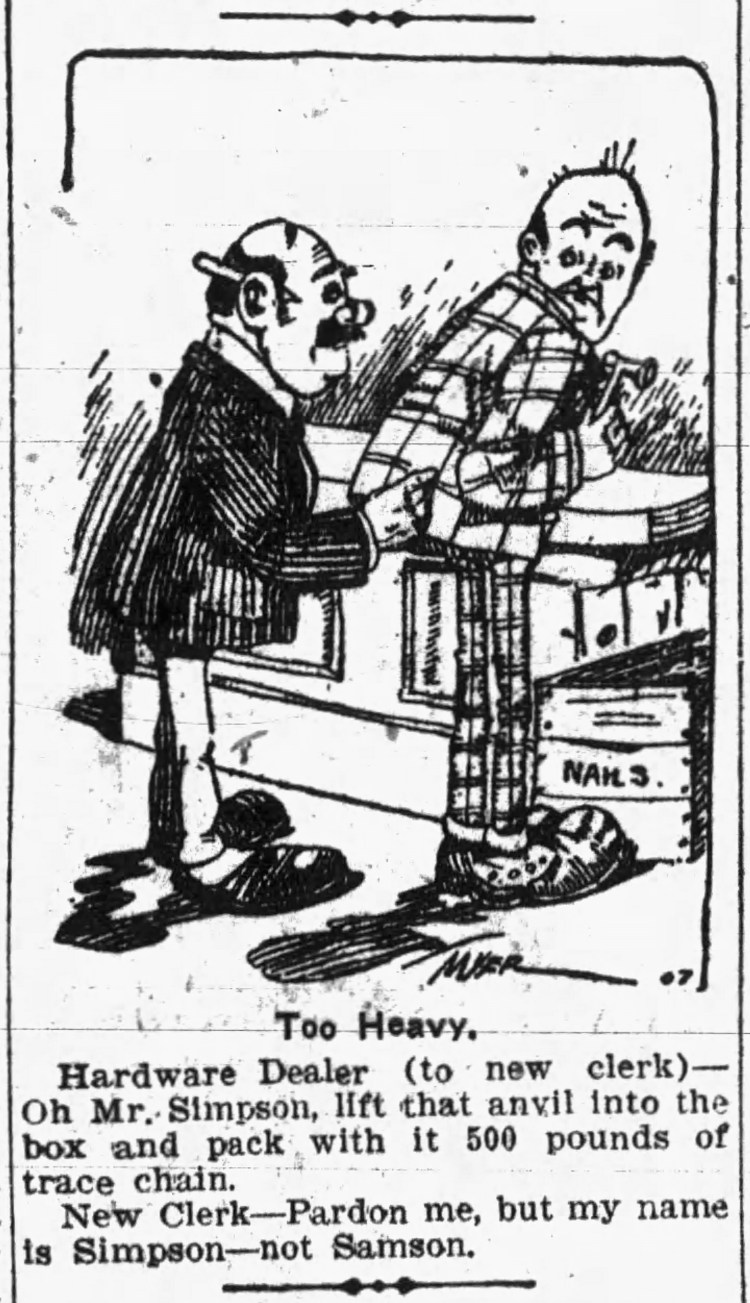
UK, 1906—used by a workman asked to lift too heavy an object—‘Simpson’ chosen for its similarity with ‘Samson’, the name of a biblical hero of enormous strength
Read More
