‘like a twisted sandshoe’: meanings and early occurrences
Australia, 1954—extremely ugly; extremely tired—the noun ‘sandshoe’ denotes a light canvas shoe with a rubber sole
Read More
“ad fontes!”
Australia, 1954—extremely ugly; extremely tired—the noun ‘sandshoe’ denotes a light canvas shoe with a rubber sole
Read MoreNew Zealand, 1885; Australia, 1897—to make a good impression on a person, to ingratiate oneself, to improve one’s position—refers to the children’s game of marbles
Read MoreAustralia, 1933—an addict of cheap wine or/and of methylated spirits—apparently coined jocularly after ‘Wyandotte’, denoting a domestic chicken of a medium-sized American breed
Read More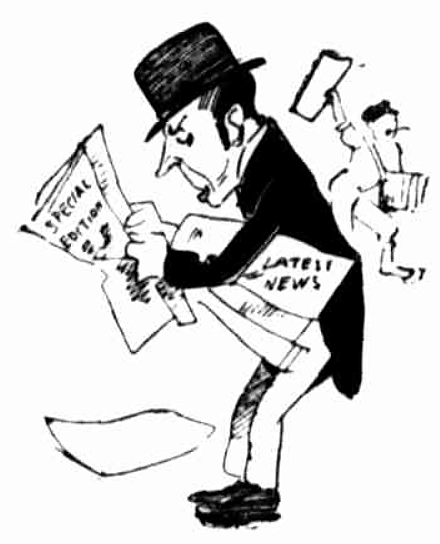
Australia—1914: the nose of an overly inquisitive person—later: an overly inquisitive person, who pries into the affairs of others—hence used as a verb meaning ‘to pry’, ‘to snoop’
Read MoreAustralian English, 1848: any urban area (said to be of Aboriginal origin)—Irish and British English, 1862: Dublin and London—alludes to smoke as characteristic of an urban area
Read MoreAustralia, 1893—refers to extreme thirst or to extreme dryness—popularised by the Australian short-story writer and balladist Henry Lawson (1867-1922)
Read MoreAustralia, 1901—refers to rough penmanship—alludes to Clancy of the Overflow (originally published in The Bulletin, Sydney, on 21st December 1889), by the Australian poet Andrew Barton Paterson
Read MoreAustralia, 1944—jocular—denotes the Yarra River, which flows through Melbourne, Victoria—alludes to the brownish colour of this river, the image being that the mud is on the top, not at the bottom, of this river
Read MoreAustralia, 1981—very dry—alludes to the alleged poor personal hygiene of the British—here, the Australian noun ‘Pommy’ designates a British person
Read More1950—‘grasshopper’ and its shortened form ‘grassy’, typically used in the plural, denote a tourist, especially a visitor to Canberra—the image is that a coachload of tourists is similar to a swarm of grasshoppers
Read More
