late 19th century—to disappear suddenly without leaving information about one’s whereabouts—from conjuring, in which ‘vanishing act’ designates an act of making a person or thing disappear as if by magic, and an act of disappearing in this manner
Australia, 1943—a foolish or silly person—from the synonymous noun ‘dill’ (1933), itself apparently a back-formation from the adjective ‘dilly’, meaning ‘foolish’, ‘silly’
USA, 1871: a person who frequently uses or coins slang words and phrases—USA, 1926: a person who studies the use and historical development of slang—blend of the nouns ‘slang’ and ‘linguist’
UK Parliament, 1902: rapid verbal exchanges between two parties—Queensland Parliament, 1902: the to and fro of amendments to bills between two Houses of Parliament
Australia, 1865 (nonce-use): the process of turning into a person of high social rank—UK, 1964 (coined by sociologist Ruth Glass): the process whereby middle-class people take up residence in a traditionally working-class area of a city
has been colloquially used to express a great variety of notions, in particular ugliness and madness, but also unpleasantness, unpredictableness, agitation, disturbance, etc.
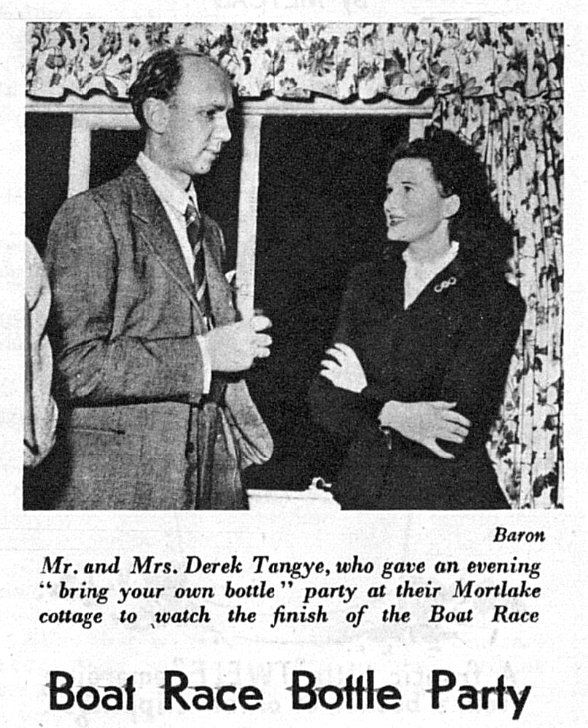
a party to which attendees are encouraged to bring their own drinks, especially alcohol—‘bring-your-own-bottle party’: USA, 1923, in the context of Prohibition—‘bring-a-bottle party’: UK, 1928
Australia, 1986—used as an assurance that all is fine, or to express one’s agreement or acquiescence—euphemistic alteration, with switching of the initial consonants, of ‘no fucking worries’


 word histories