‘spud-cocky’: meaning and origin
Australia, 1911—a potato farmer—composed of ‘spud’ (a potato) and ‘cocky’ (a farmer working a small-scale farm)—‘cocky’: shortened form of ‘cockatoo’ (a farmer working a small-scale farm)
Read More
“ad fontes!”
Australia, 1911—a potato farmer—composed of ‘spud’ (a potato) and ‘cocky’ (a farmer working a small-scale farm)—‘cocky’: shortened form of ‘cockatoo’ (a farmer working a small-scale farm)
Read More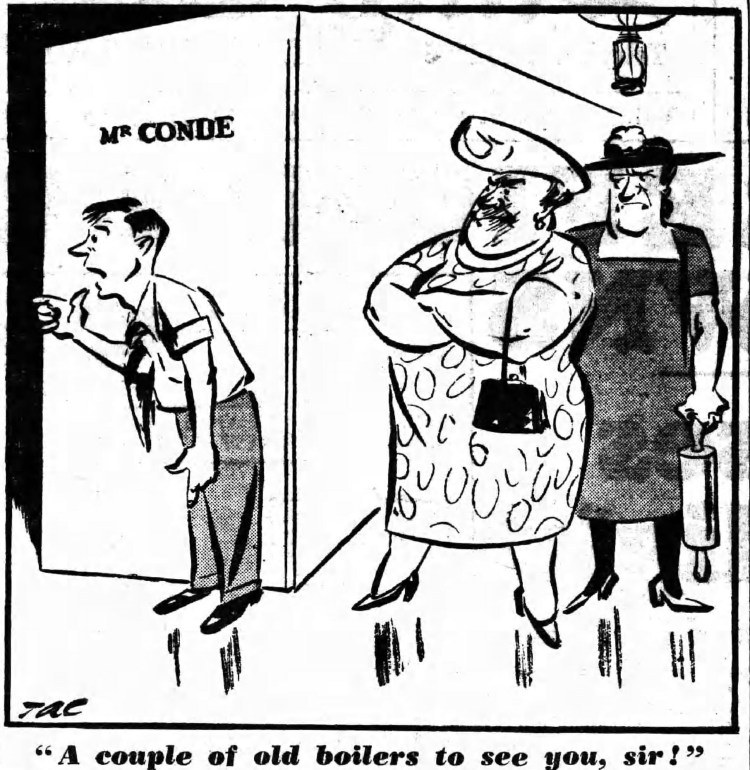
Australia, 1950—UK, 1962—derogatory and offensive: a middle-aged or elderly woman, especially one who is unattractive or unfeminine—refers to ‘boiler’, i.e., a tough old chicken for cooking by boiling
Read Moreis used to comment contemptuously on an instance of unthinking imitation, or of learning or performing by rote—USA, 1889—apparently first used by Californian retailers
Read Moreto reach, or to be in, a state of extreme privation; to suffer hardship; to die, especially of thirst—New Zealand (miners, 1871) & Australia (1881)
Read MoreAustralia, 1947—used of any ineffectual Australian-Rules-Football player, and, by extension, of any ineffectual person
Read More
UK—a trifling, whimsical news item, especially one that is used as a light-note ending to a television or radio news broadcast—from a short film about a pet duck, first broadcast on the BBC on 24 May 1978
Read More
rhyming slang for ‘drunk’—Australia, 1952—may have originally alluded to ‘Molly the Monk’, the name given in Australia to various primates kept in captivity or used for entertainment
Read MoreAustralia, 1888—to stir up controversy; to liven things up—also ‘to rouse the possum’ (Australia, 1898)—this phrase probably developed as the obverse of ‘to play possum’
Read MoreUK, 1841—to be crowded or confined tightly together, as sardines in a tin
Read More‘extremely poor’—USA, 1817—humorous variant of ‘(as) poor as Job’, from the name of the eponymous protagonist of a book of the Old Testament, taken as the type of extreme poverty
Read More word histories