The English poet John Taylor (1578-1653) wrote, in The great eater, of Kent, or Part of the admirable teeth and stomacks exploits of Nicholas Wood, of Harrisom in the county of Kent His excessiue manner of eating without manners, in strange and true manner described, by Iohn Taylor (1630): One Iohn Dale was too hard […]
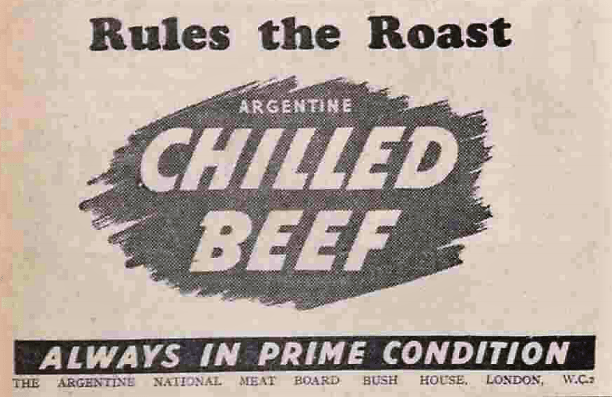
To rule the roost means to be in a dominating position over others. This phrase conjures up a picture of a cock lording it over a group of hens, i.e. a roost, in the farmyard, and appears to be similar to cock of the walk, which designates someone who dominates others within a group. But […]
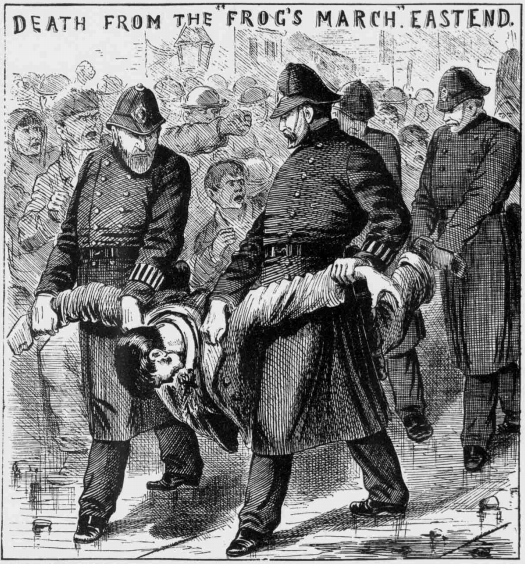
The verb to frog-march (somebody) means to force (somebody) to walk forward by holding and pinning their arms from behind. This sense is milder than the original, as the frog’s march was a police metaphor denoting a method of moving a resistant person such as a prisoner, in which he or she is lifted by […]
The phrase ‘a pretty kettle of fish’ originally referred to a net full of fish, which, when drawn up with its contents, is suggestive of confusion, flurry and disorder—‘kettle’ being a form of ‘kiddle’, a noun denoting a dam or other barrier in a river, with an opening fitted with nets to catch fish.
“Go by Shanks’ pony – Walk short distances and leave room for those who have longer journeys” – a Second World War poster by Lewitt-Him for the Ministry of War Transport – image: Imperial War Museums The phrase Shanks’(s) pony, or mare, etc, means one’s own legs as a means of conveyance. It is […]
Donkey is a word of late appearance and of uncertain origin. It was first defined by the English antiquary and lexicographer Francis Grose (1731-91) in A Classical Dictionary of the Vulgar Tongue (1785): Donkey, donkey dick: a he, or jack ass, called donkey, perhaps from the Spanish or don-like gravity of that animal, entitled also the king […]
MEANING The phrase donkey’s years means a very long time. ORIGIN This expression is inseparable from donkey’s ears. In fact, these two expressions were originally a single one, donkey’s years being simply a dialectal pronunciation of donkey’s ears—or the other way around. And donkey’s ears/years (also donkeys’ ears/years) was part of a […]
MEANING to smell a rat: to detect something suspicious ORIGIN The first known use of this phrase is in The Image of Ipocrysy, an anonymous poem written around 1540, denouncing “the cruell clergy”: (published in 1843) Suche be owr [= our] primates, Our bisshopps and prelates, Our parsons and curates, With other […]


 word histories