‘beau-catcher’: meaning and origin
USA, 1815—a circular curl of hair (sometimes artificial), usually pressed flat against the temple or forehead
Read More
“ad fontes!”
USA, 1815—a circular curl of hair (sometimes artificial), usually pressed flat against the temple or forehead
Read More
Ireland & Britain, 1850—a person who goes round the streets in the early morning to awaken factory hands—from ‘to knock somebody up’, meaning ‘to awaken somebody by knocking at the door’
Read Moreto embark enthusiastically on a course of action that most sensible people would avoid—coined as ‘fools rush in where angels fear to tread’ by the English poet Alexander Pope in An Essay on Criticism (1711)
Read Moresomething of no value, something to which one is utterly indifferent—UK, 1785—derives from a misinterpretation of “Worth makes the Man, and Want of it the Fellow;/The rest, is all but Leather or Prunella.” in An Essay on Man (1734), by Alexander Pope
Read Moreto use unnecessary force in destroying something fragile—alludes to a wheel used as an instrument of torture—first occurs in An Epistle from Mr. Pope, to Dr. Arbuthnot (1734), by the English poet Alexander Pope (1688-1744), who perhaps coined this phrase
Read MoreUK, 1685—a person who is friendly only when it is easy or convenient to be so, whose friendship cannot be relied on in times of difficulty
Read MoreUK, 1788—very drunk—may refer to Chloe, a woman with whom the English poet Matthew Prior (1664-1721) allegedly drank, and whom he often mentioned in his poems
Read MoreUK, 1808—elaboration on ‘accidents will happen’, meaning accidents will happen despite efforts taken to prevent them
Read More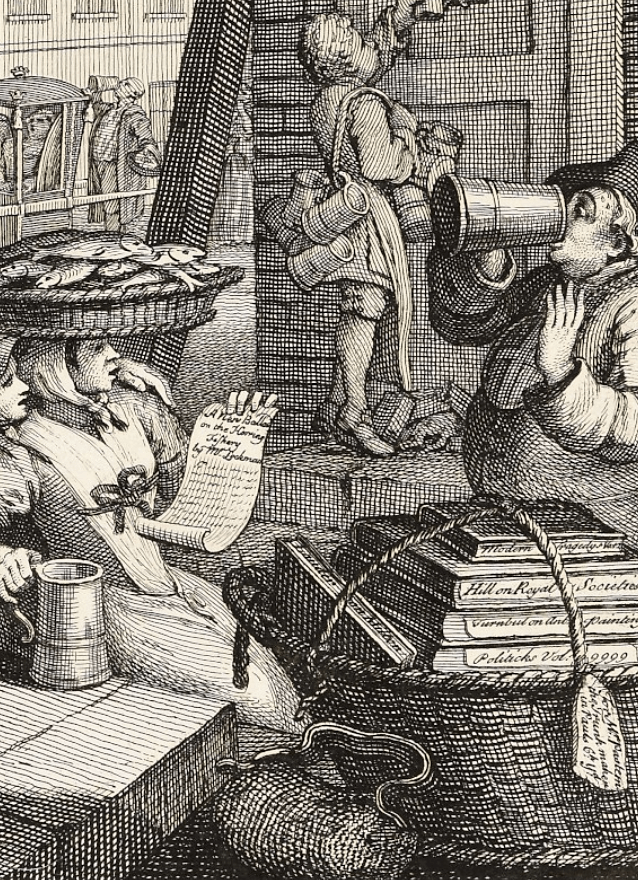
UK, 18th and 19th centuries—‘trunkmaker’ was often employed with allusion to the use of the sheets of unsaleable books for trunk-linings
Read Moredenotes extreme quickness of movement—the use of ‘greased’ likens lightning to a machine that a mechanic has lubricated in order to minimise the friction and make it run easily
Read More word histories