How Voltaire (and English) revived the French verb ‘désappointer’
Voltaire revived the use of ‘désappointer’ in the sense ‘to frustrate the expectation or desire of (a person)’ with reference to this use of the English verb ‘disappoint’.
Read More
“ad fontes!”
Voltaire revived the use of ‘désappointer’ in the sense ‘to frustrate the expectation or desire of (a person)’ with reference to this use of the English verb ‘disappoint’.
Read Morea difficult, uncooperative or unsociable person—UK, 1829—from French ‘mauvais coucheur’, literally ‘bad bedfellow’, with original allusion to a person whom a traveller had to share a bed with when stopping over at an inn
Read Morealso ‘no joy without annoy’—meaning: there is a trace of trouble or difficulty in every pleasure—was already a common proverb in the late sixteenth century
Read More
originally the sky-blue ribbon worn by the Knights-grand-cross of the French order of the Holy Ghost—applied by extension to other first-class distinctions
Read More
Decided by the Académie française, the erroneous spelling ‘oignon’ (= ‘onion’) has become a symbol of prejudiced people, ignorant of the history of their own language.
Read Moreultimately based on the fable of the mice, or rats, who proposed to hang a bell round the cat’s neck, so as to be warned of its approach
Read More‘Magazine’ (= ‘storehouse’) came to denote a book providing information on a specified subject (17th c.). This gave rise to the sense ‘periodical magazine (= ‘repository’) of the most interesting pieces of information published in the newspapers’ (18th c.).
Read More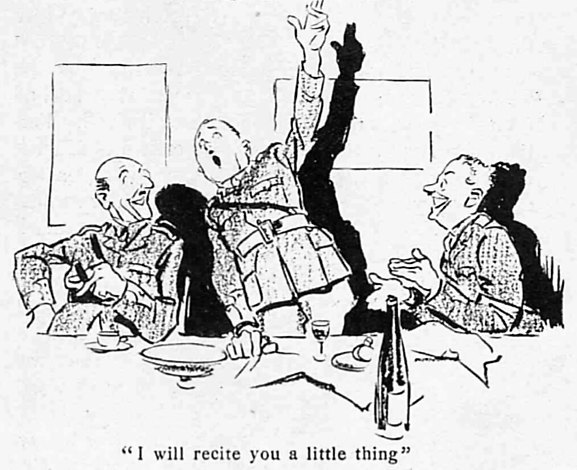
some characteristic slang creations of the British, U.S. and French soldiers during World War One, as recorded in ‘Trench Talk’, published in Everybody’s Magazine (New York) of January 1918
Read Moresupposedly an allusion to the preparation of fabric to be worked on: once the shapes have been cut out, the tailor still has a lot of sewing to do
Read More
phonetic reduction of ‘Christ’s cross’; first element phonetically reduced as in ‘Christmas’; hence ‘criss-cross’ treated as a reduplication of ‘cross’
Read More word histories