‘porky’ (rhyming slang for ‘lie’)
In British English, the noun ‘porky’ (also ‘porkie’) is short for ‘porky pie’ (also ‘porkie pie’), which is an alteration of ‘pork pie’, rhyming slang for the noun ‘lie’.
Read More
“ad fontes!”
In British English, the noun ‘porky’ (also ‘porkie’) is short for ‘porky pie’ (also ‘porkie pie’), which is an alteration of ‘pork pie’, rhyming slang for the noun ‘lie’.
Read MoreUK, 1993—meaning: influenced or determined by a person’s locality or postal address—in phrases such as ‘postcode discrimination’—frequently with reference to the unequal provision of healthcare
Read More
UK, 1938—a state of nervous agitation or confusion; also, occasionally: a state of physical disorder or chaos—of unknown origin; perhaps a fanciful variant of the synonymous noun ‘tizz’
Read MoreUSA, 1974—a moment of sudden realisation, enlightenment or inspiration—alludes to the representation of an illuminated lightbulb above a character’s head in a cartoon or comic strip, indicating that this character has had an idea
Read MoreUK, 1886—to be incompetent at performing the action denoted by the verb—the underlying notion is presumably of failing to win even the smallest prize
Read Morea situation that has been completely mismanaged—from ‘omni-’ and ‘shambles’—coined by Tony Roche in the British television series The Thick of It (3rd series, episode 1, 24 October 2009)
Read MoreUSA, 1978—to commit suicide; to demonstrate unquestioning obedience or loyalty—alludes to a mass suicide, in 1978, by members of the Peoples’ Temple in Jonestown, Guyana, who drank a cyanide-laced drink thought to be similar to Kool-Aid
Read MoreUSA, 1938—(of hair) washed and rinsed so clean that it squeaks—by extension: completely clean—figuratively: above criticism, beyond reproach
Read MoreUSA, 1918—a mechanic—since the 17th century, ‘monkey’ has been used (frequently with modifying word indicating the occupation concerned) to denote a person engaged in a trade or profession
Read More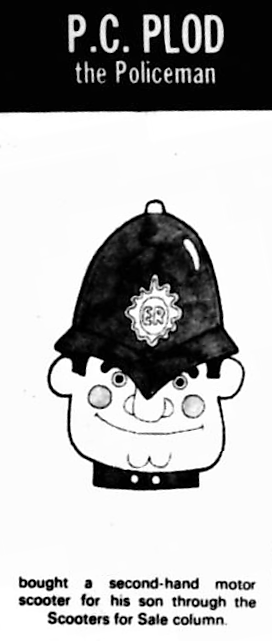
UK, 1963—‘Mr. Plod’, also ‘P.C. Plod’, ‘Plod’: a humorous or mildly derogatory appellation for a policeman or for the police—alludes to ‘Mr. Plod’, the name of the policeman in stories by the English author of children’s fiction Enid Blyton
Read More word histories