UK, 19th century—‘red on the map’: the colonies and dominions of the British Empire—‘to paint the map red’: to expand the territory of the British Empire—from the colour used to represent British colonies and dominions on maps
UK, 1914—snobbish or supercilious—refers perhaps to ‘toff’, denoting a fashionable upper-class person—the image is perhaps of someone who, considering themself superior, keeps their nose high in contempt for the lower classes—cf. the form ‘toffy-nosed’ (1919)
UK, 1927—affected, pompous—from ‘pound note’ and the suffix ‘-ish’, meaning ‘having the qualities of’—the image is probably of someone who pretends to be worth a pound sterling when they are actually worth less
1609—to add to what is already great, also to add difficulty to difficulty—Pelion and Ossa are two mountains in Thessaly—in Greek mythology, two giants, Otus and Ephialtes, tried to pile Pelion and Ossa on Olympus in order to reach the gods and overthrow them
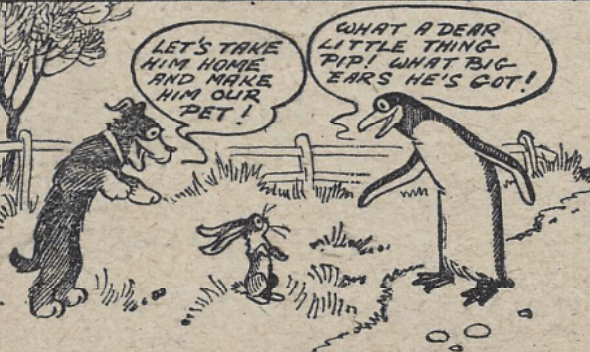
UK, 1920—a group of three objects or persons—alludes to Pip, Squeak and Wilfred, a trio of animal characters featured in a children’s comic strip published in The Daily Mirror (London) from 1919 onwards
Australia, 1847—an odd-job man—‘wood-and-water’ alludes to the phrase ‘hewer of wood and drawer of water’, designating a labourer of the lowest kind—‘joey’ is perhaps the noun denoting a young kangaroo, and by extension anything young or small
1727—a labourer of the lowest kind—refers to the enslavement of the Gibeonites by the Israelites in the Book of Joshua, 9:21-27, as it occurs in the King James Bible (1611)
USA, 1959—a very tidy, well-organised person—a blend of the adjective ‘neat’ and of the noun ‘beatnik’—originally occurred chiefly in contrast to ‘beatnik’
UK, 2015—(depreciative) a supporter of Jeremy Corbyn, Leader of the Labour Party and Leader of the Opposition from 2015 to 2020—coined after nouns such as ‘Sandinista’—intended to liken Corbyn’s supporters at best to radical socialists and at worst to cultists


 word histories