‘Montezuma’s Revenge’: meaning and origin
USA, 1955—diarrhoea suffered by travellers, especially in Mexico—alludes to the Aztec emperor Montezuma II (c.1466-1520), who was captured by the Spanish and died in captivity
Read More
“ad fontes!”
USA, 1955—diarrhoea suffered by travellers, especially in Mexico—alludes to the Aztec emperor Montezuma II (c.1466-1520), who was captured by the Spanish and died in captivity
Read MoreUK, 1930—used of a man who pretends to be well-off despite having little money—the image is of a man of limited means who spends what he has on smart clothes, and therefore cannot afford any breakfast
Read MoreUK, 1934—used of a person who pretends to be well-off despite having little money—the image is of a person who has expensive curtains on the windows of their house, but subsists on a diet of inexpensive fish
Read MoreUK, 1826—to find oneself in a situation that has turned out to be difficult to control but cannot be got out of—the image is that someone holding a tiger by the tail can neither keep hold of it nor let go of it with safety
Read Moreto invest one with energy—USA, 1959 & 1960—used as an advertising slogan by both Oklahoma Oil Company and Humble Oil & Refining Company—this advertising slogan soon became a popular catchphrase
Read MoreAustralia, 1933—an addict of cheap wine or/and of methylated spirits—apparently coined jocularly after ‘Wyandotte’, denoting a domestic chicken of a medium-sized American breed
Read More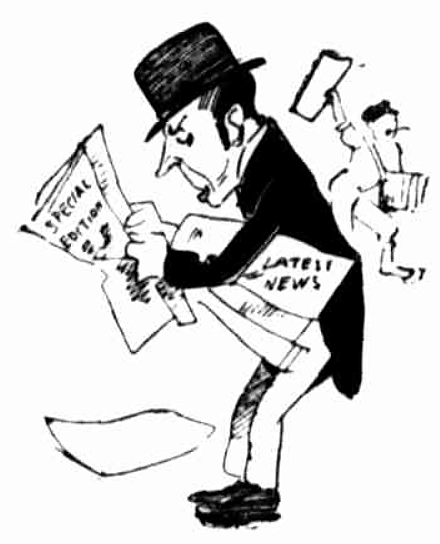
Australia—1914: the nose of an overly inquisitive person—later: an overly inquisitive person, who pries into the affairs of others—hence used as a verb meaning ‘to pry’, ‘to snoop’
Read More
UK, 1880—a promenade at the seaside resort of New Brighton, in north-western England—alludes to the fact that cooked ham served with eggs was a popular dish at New Brighton’s eating-places
Read MoreAustralian English, 1848: any urban area (said to be of Aboriginal origin)—Irish and British English, 1862: Dublin and London—alludes to smoke as characteristic of an urban area
Read MoreAustralia, 1893—refers to extreme thirst or to extreme dryness—popularised by the Australian short-story writer and balladist Henry Lawson (1867-1922)
Read More word histories