‘to take one’s courage in both hands’: meaning and origin
to muster up all one’s courage—UK, 1830—probably a calque of the French phrase ‘prendre son courage à deux mains’
Read More
“ad fontes!”
to muster up all one’s courage—UK, 1830—probably a calque of the French phrase ‘prendre son courage à deux mains’
Read Moredefined by Collins Dictionary as denoting “an extended period of instability and insecurity, especially one resulting from a series of catastrophic events”—first used in 1975 by the U.S. political scientist John Pearson Roche
Read More
a woman regarded as an object of sexual desire—UK, 1895—from ‘crackling’, denoting the crisp skin or rind of roast pork
Read More(literally): to fall heavily; (figuratively): to fail completely—UK, 1847—‘cropper’ may be derived from ‘crop’ in the phrase ‘neck and crop’ (1791), which originally referred to a heavy fall
Read More
a rebuke given in private by a wife to her husband—1625—from the idea that, in order to conduct herself properly, a wife was to rebuke her husband in secret only, i.e., in the privacy of their curtained bed
Read Moreused of a person who likes to observe other people’s activities from his or her window, in a furtive and prying manner—UK and Ireland, 1940
Read Morelove or affection insincerely professed or displayed as a means of gaining a benefit or advantage—circa 1665—the image is of love given in return for food from a cupboard
Read More
the affected dandyism of the writers, artists, etc., associated with the aesthetic movement, which advocated a doctrine of ‘art for art’s sake’—UK, 1879—coined by George Du Maurier in cartoons published in Punch
Read Morethe political, military or economical threat regarded as being posed by certain peoples of South-East and East Asia, especially the Chinese and the Japanese—UK, 1895—loan translation from French ‘péril jaune’
Read More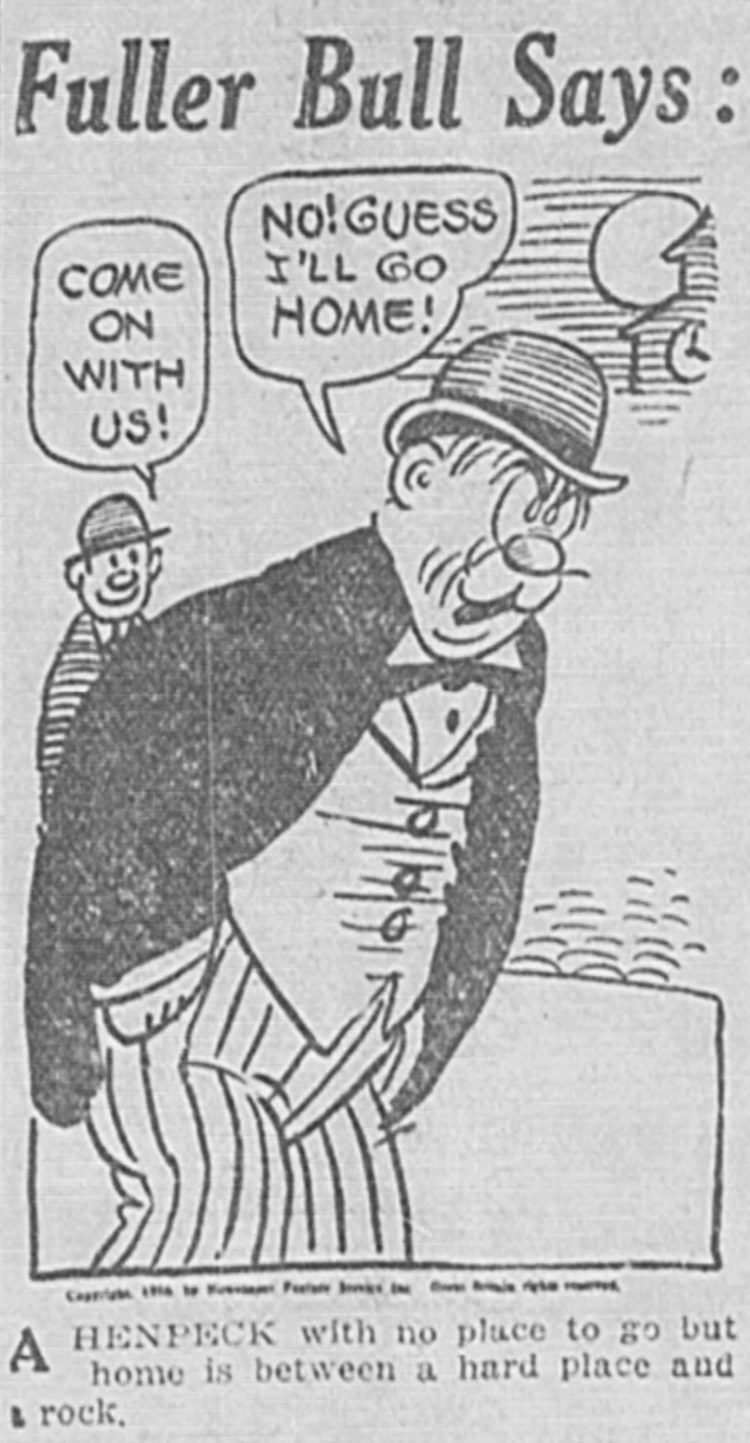
faced with two equally difficult alternatives; in a dilemma—USA, 1914
Read More word histories