genetically modified food—but had been used earlier by members of Weight Watchers in the sense of food one is addicted to—in reference to ‘Frankenstein; Or, The Modern Prometheus’ (1818), by Mary Shelley
also ‘Frankenstein’—a creation over which the creator loses control, eventually being destroyed by it—UK, 1822—alludes to ‘Frankenstein; Or, The Modern Prometheus’ (1818), by Mary Shelley
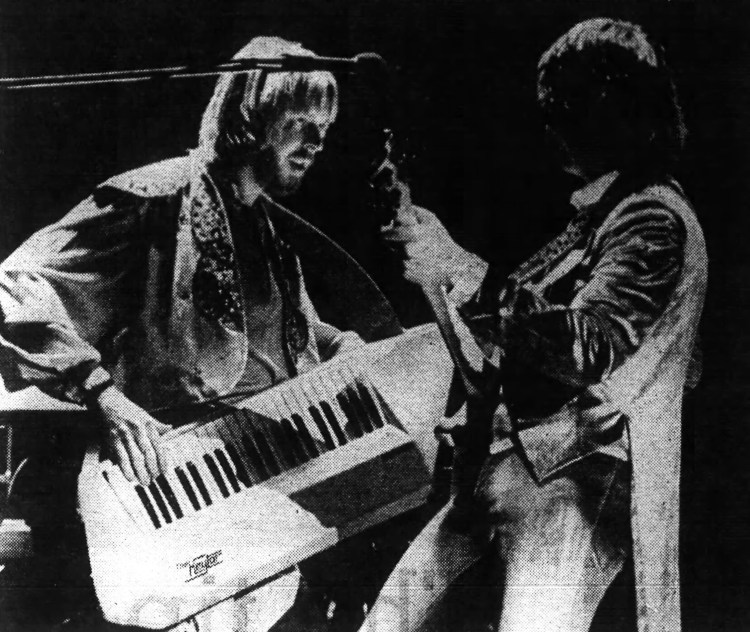
a synthesizer designed to be held in the manner of a guitar, with one hand playing a keyboard while the other operates controls on an extended handle—USA, 1979—from ‘key-’ in ‘keyboard’ and ‘-tar’ in ‘guitar’
to intimidate somebody—UK, from 1958 onwards in books by Frank Norman (1930-1980)—also, the noun ‘frightener’ designates a member of a criminal gang who intimidates the victims of its activities
a factor speculatively included in a hypothesis or calculation, especially to account for some unquantified but significant phenomenon or to ensure a desired result—USA, 1947
to set someone thinking very hard or seriously, to give someone much food for thought—UK, 1889—loan translation from French ‘donner furieusement à penser’
the only option worth considering—USA, 1904—from the story (1894) of a man who is so addicted to faro that he takes part in a game despite knowing it to be rigged, because it is the only game available in town

 word histories