‘cut the cackle (and come to the horses)’: meaning and origin
‘stop talking (and get to the heart of the matter)’—UK, 1878—said to have been coined by circus proprietor Andrew Ducrow when apostrophising equestrian performers
Read More
“ad fontes!”
‘stop talking (and get to the heart of the matter)’—UK, 1878—said to have been coined by circus proprietor Andrew Ducrow when apostrophising equestrian performers
Read Morea person’s mouth—U.S. slang, 1983
Read More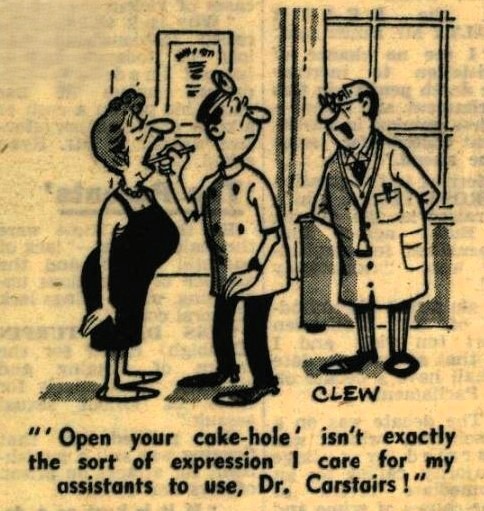
a person’s mouth—British-Army slang, 1916
Read MoreYorkshire & Lancashire, 19th century—wisdom, a witty remark, etc., which occurs to a person after the event, typically too late to be of use
Read Morealso ‘moustache of milk’—UK, 1872—a white residue, resembling a growth of hair above the upper lip, left after drinking milk
Read MoreUSA, 1888—at variance/in line with the (likely) thought, practice or judgement of the future; at odds/coincident with how commentators view (or are likely to view) an issue or action retrospectively
Read MoreUK, 1866, sailors’ slang: a straw mattress—Australia, 1884: a straw hat—in reference to donkeys’ diet
Read More1777, in a translation of a letter written by Voltaire in 1768—a loan translation from French ‘l’histoire n’est qu’une fable convenue’, first used in 1758 by the French philosopher Claude Adrien Helvétius
Read MoreAustralia, 1957—to gain weight around one’s middle
Read MoreUK, 1812—an imaginary functionary humorously supposed to control the state of the weather—also ‘clerk of the weather office’
Read More word histories