The Cheshire cat is now largely identified with the character in Alice’s Adventures in Wonderland (1865), by the English writer Lewis Carroll (Charles Lutwidge Dodgson – 1832-98): “Please would you tell me,” said Alice, a little timidly, for she was not quite sure whether it was good manners for her to speak first, “why your […]
MEANING a heavy cotton pile fabric with lengthways ribs ORIGIN: UNKNOWN The original form of this noun, in the late 18th century, was corderoy. The earliest use of the word that I have found is from The Manchester Mercury (Manchester, Lancashire, England) of Tuesday 7th April 1772: […]
In A Dictionary of the English Language (1755), the English lexicographer Samuel Johnson (1709-84) thus defined bonfire: [from bon, good, French, and fire.] A fire made for some publick cause of triumph or exultation. In support of this etymology, bonfire in several languages is, literally, fire of joy. For example: – French feu de joie – Italian fuoco d’allegrezza – German Freudefeuer – Dutch vreugdevuur. But […]
MEANING The following definition of budget is from the New English Dictionary (i.e. Oxford English Dictionary – 1888 edition): A statement of the probable revenue and expenditure for the ensuing year, with financial proposals founded thereon, annually submitted by the Chancellor of the Exchequer, on behalf of the Ministry, for the approval of the House […]
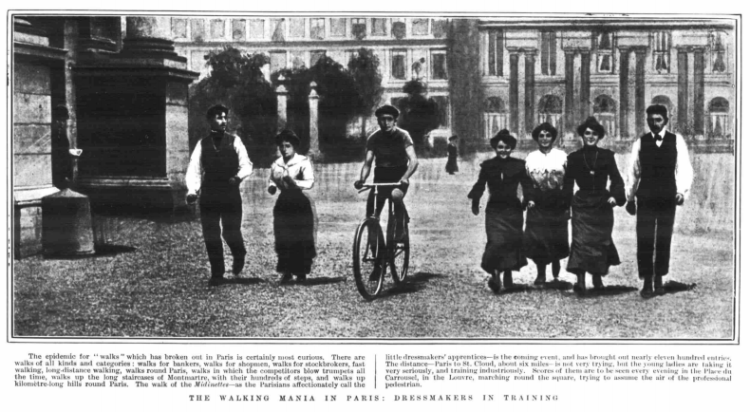
Phonetically and semantically similar to milliner, the French word midinette was defined as “a milliner’s female assistant, especially in Paris” in the 1933 Supplement to the New English Dictionary (as the Oxford English Dictionary was known). However, while milliner literally means a Milanese, a native or inhabitant of Milan, midinette is a portmanteau word, composed […]
A milliner is a person (generally a woman) who makes or sells women’s hats. But a Milliner was originally a native or inhabitant of Milan, a city in northern Italy. The word is first recorded in this sense in an Act of Parliament in 1449: That every Venician, Italian, Januey, Florentyn, Milener, Lucan, Cateloner, Albertyns, […]
The noun galaxy is from post-classical Latin galaxias, denoting the Milky Way, from Hellenistic Greek γαλαξίας (= galaxias), short for γαλαξίας κύκλος (= galaxias kuklos), milky circle, from ancient Greek γάλα/γαλακτ- (= gala/galakt-), milk. Originally therefore, galaxy, often with the and capital initial, denoted the Milky Way, that is, the diffuse band of light stretching across […]
The adjective piping hot is used to refer to very hot food or liquid, usually when served. It referred originally to the hissing of viands in the frying pan, the verb pipe meaning, in this case, to make a whistling sound. This adjective is first attested in The Miller’s Tale, by the English poet Geoffrey […]
MEANING the fourth estate: the press; the profession of journalism ORIGIN The first known user of the expression, designating the ordinary people, was the English author and magistrate Henry Fielding (1707-54) writing, under the pseudonym of Sir Alexander Drawcansir, Knt. Censor of Great Britain, in The Covent-Garden Journal of Saturday 13th June […]
MEANING the action of stealing goods from a shop while pretending to be a customer ORIGIN The slang use of the verb lift to mean to steal something from (a shop, etc.) seems to date back to the 16th century. One of the earliest attestations of this usage refers to the London […]

 word histories