The word kidney, which is attested around 1325, is of unclear origin. The second element of the Middle-English form kidenei, plural kideneiren, is apparently ey, plural eyren, meaning egg (cf. German Eier, literally eggs, used to mean testicles). The first element remains uncertain; it is perhaps identical with cud. The Anglo-Saxon name for kidney was […]
James Crichton of Clunie (circa 1560-1582) was a Scottish prodigy of intellectual and knightly accomplishments, and the epithet admirable became traditionally applied to him. The Scottish scholar John Johnston (circa 1565-1611) used the Latin adjective admirabilis in Heroes ex omni historia Scotica lectissimi (1603), a collection of biographies and eulogies in elegiac couplets of great […]
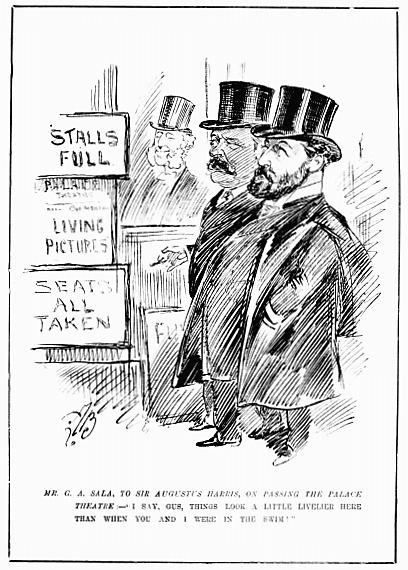
G. A. SALA, TO SIR AUGUSTUS HARRIS, ON PASSING THE PALACE THEATRE:—“I SAY, GUS, THINGS LOOK A LITTLE LIVELIER HERE THAN WHEN YOU AND I WERE IN THE SWIM!” — from The Entr’acte and Limelight (London) of 10th March 1894 (Augustus Harris (1825-73) was a British actor and theatre manager. George Augustus Sala (1828-95), was an […]
MEANING a single fortunate event doesn’t mean that what follows will also be good ORIGIN The annual migration of swallows to Europe from southern climes at the end of winter was the subject of a proverb in Ancient Greece: μία χελιδὼν ἔαρ οὐ ποιεῖ, in which ἔαρ means spring; it is found […]
The phrase ‘pour encourager les autres’ (‘in order to encourage the others’) was coined by Voltaire with reference to the execution of Admiral John Byng in 1757.
mandragoras – from Stirpium historiae pemptades sex sive libri XXX (1583), by Rembert Dodoens The term hand of glory originally denoted a charm made from, or consisting of, the root of a mandrake. A calque of French main de gloire, it was first used in Curiosities of nature and art in husbandry […]
In A Dictionarie of the French and English Tongues (1611), Randle Cotgrave gave the following definition of the French word gazette: A certaine Venetian coyne scarce worth our farthing; also, a Bill of Newes; or, a short Relation of the generall occurrences of the Time, forged most commonly at Venice, and thence dispersed, euery month, into most parts of Christendome. […]
Figuratively, a loose cannon is an unpredictable or uncontrolled person who is liable to cause unintentional damage. But in practice, it was one inadequately lashed in place on the deck of a ship, which caused havoc by rolling dangerously and unpredictably. The first known mention of a loose cannon being tossed about the deck of […]
In his comédie-ballet Le Bourgeois gentilhomme (literally The Bourgeois Gentleman – 1670), the French playwright and actor Molière (Jean-Baptiste Poquelin – 1622-73) invented the word Mamamouchi, an imaginary Turkish title that Monsieur Jourdain is gulled into thinking the son of the Grand Turk confers upon him. (Jourdain is a bourgeois whose aim is to be […]
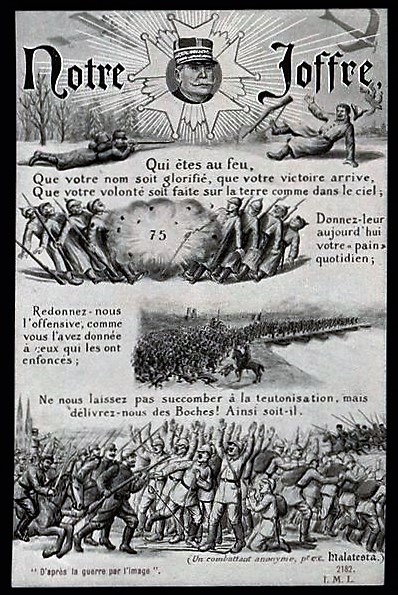
Notre Joffre (parody of the Lord’s Prayer) first published in 1914 in Le Radical de Marseille (75 refers to the French 75-mm field gun.) From 1914 to 1916, Joseph Joffre (1852-1931) was the commander in chief of the French armies on the Western Front. The following parody of the Lord’s Prayer is to be replaced […]


 word histories