Aunt Sally – from The Modern Playmate: A book of games, sports, and diversions for boys of all ages (new revised edition – 1875?), by John George Wood (1827-89) The Oxford English Dictionary (first edition – 1885) thus defined Aunt Sally: a game much in vogue at fairs and races, in which […]
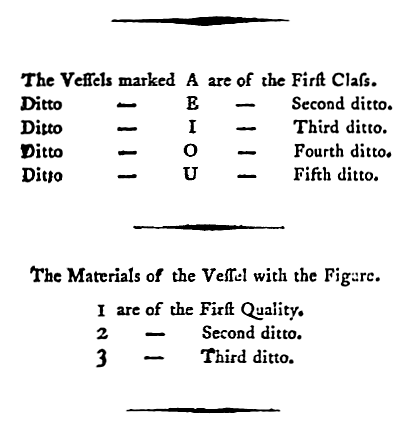
MEANING first class, outstanding ORIGIN Lloyd’s Register, historically Lloyd’s Register of Shipping, is an independent society formed in 1760 by a group of merchants operating at Lloyd’s coffee house in London, which surveys ships to ensure compliance with standards of strength and maintenance. The name also denotes an annual publication giving details […]
MEANING in the open; without dishonesty, concealment or fraud ORIGIN The adverb above board originally meant with one’s cards visible above the level of the board (that is, the playing table), so as to avoid suspicion of cheating. In A Dictionary of the English Language (1755), Samuel Johnson wrote: Above-board. In open […]
MEANING The phrase to be barking up the wrong tree means to be pursuing a mistaken or misguided line of thought or course of action—cf. also origin of ‘gone coon’. ORIGIN In Americanisms, Old and New. A Dictionary of Words, Phrases and Colloquialisms peculiar to the United States, British America, the West Indies, […]
The proper name Guy is derived, via French, from the Old German Wido, either from wit, meaning wide, or from witu, wood. Wido has become Guy in French because in words of Germanic origin, when initial, the labio-velar approximant /w/ has regularly become the velar /g/. For instance, in the French noun loup-garou, the element garou corresponds to English werewolf—in fact, loup was added when the […]
The proverb you can’t have your cake and eat it (too) means you can’t enjoy both of two desirable but mutually exclusive alternatives. It made more sense in its early formulations, when the positions of have and eat had not been reversed. It is first recorded in A dialogue conteinyng the nomber in effect of […]
The word Mayday, which dates from 1923, is used as an international radio distress signal, especially by ships and aircraft. It was supposedly coined by Frederick Stanley Mockford (1897-1962), a senior radio officer at London’s Croydon Airport, but this has not been substantiated: the fact that this story has often been repeated gives it a semblance […]
MEANING foolish or fanciful talk, ideas, plans, etc. ORIGIN It is a shortening of moonshine in the water, meaning appearance without substance, something unsubstantial or unreal. In this phrase, moonshine means moonlight. The 15th-century correspondence between members of the Paston family of Norfolk gentry, and with others connected with them in England, […]
This Latin expression is composed of virtus, virtue, and dormitiva, feminine of dormitivus, dormitive. It first appeared in the following lines in dog Latin of Le Malade imaginaire (The Imaginary Invalid – 1673), in which the French playwright Molière (Jean-Baptiste Poquelin – 1622-73) satirised the circular explanations sometimes used in early medicine: (original edition) BACHELIERVUS. Mihi à docto Doctore Domandatur causam & rationem, […]
The phrase trick or treat is a traditional formula used at Hallowe’en by children who call on houses threatening to play a trick unless given a treat or present. In early use, the phrase was also tricks or treats, treat or trick, and variants. This phrase seems to have originated in Ontario (capital: Toronto), a province of […]


 word histories